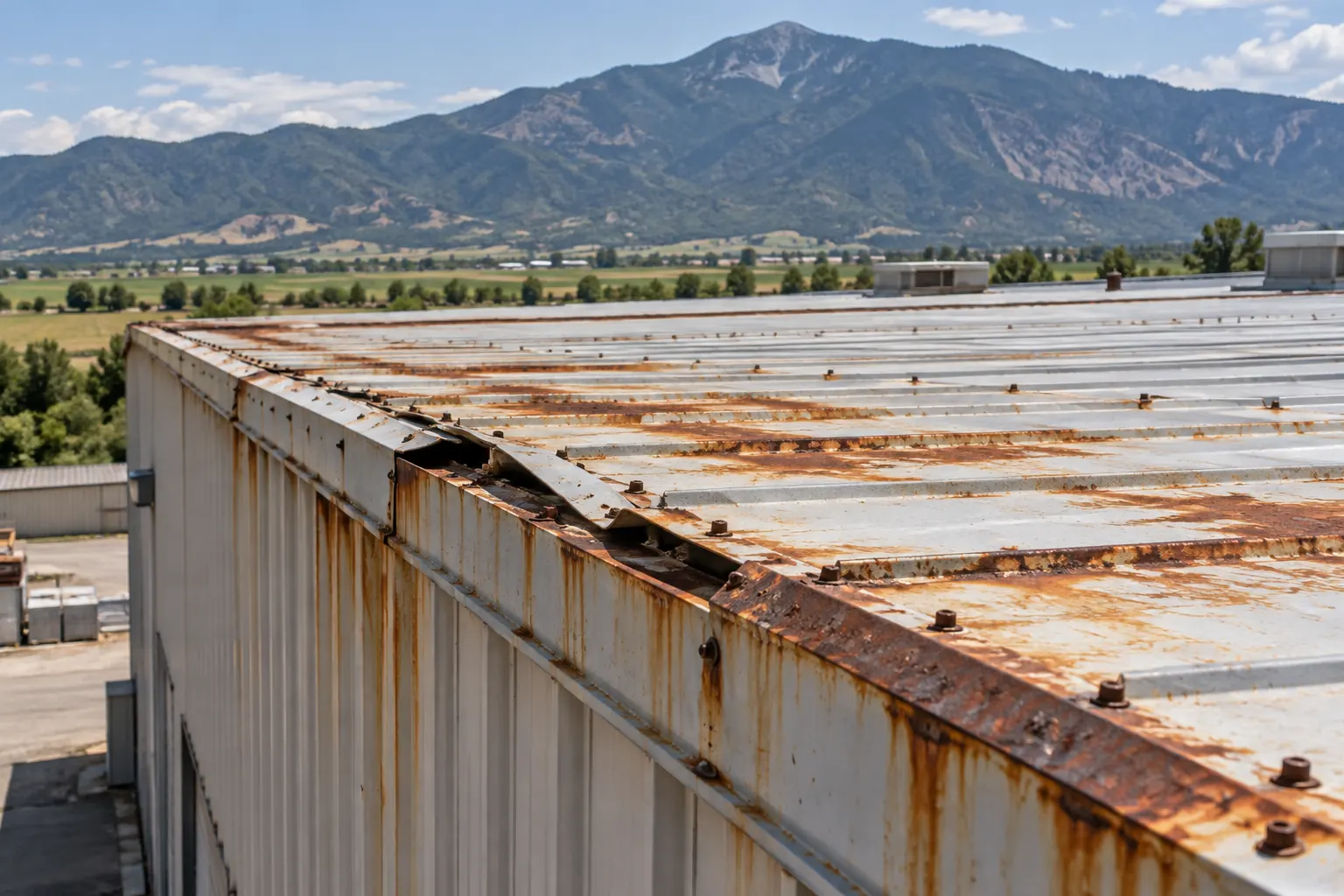
Commercial Metal Roof Repair
Shops and barns with exposed-fastener steel roofs get fasteners, laps, and eave closures repaired, along with the transition to any flat addition.
Metal roof repair for Pima shops
Pima commercial roof repair for farm and commercial buildings on the west end of the Gila Valley. We repair metal roofs, flat additions, and the joints where they meet.
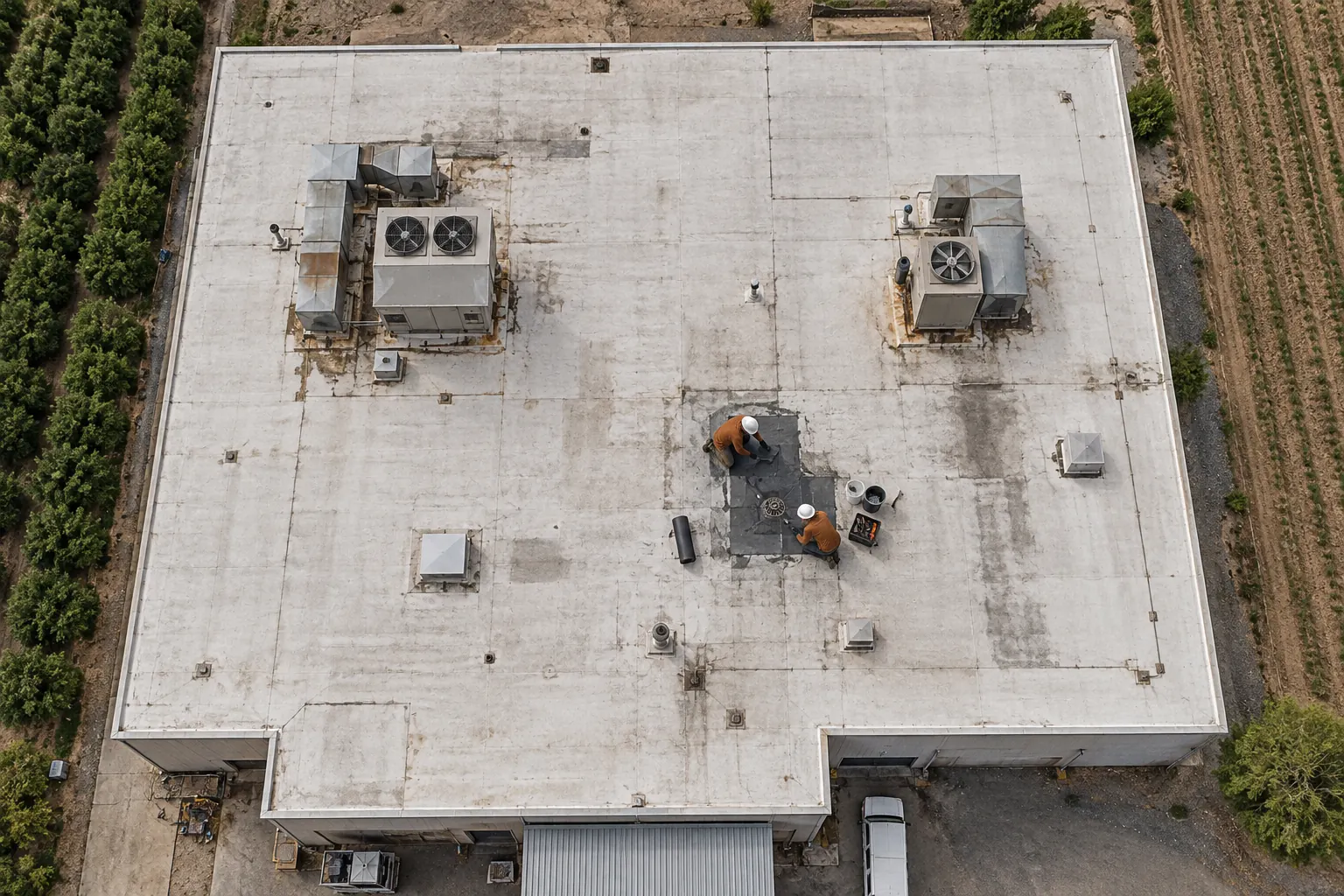
Many Pima properties grew one addition at a time, so one building can carry two roof types.
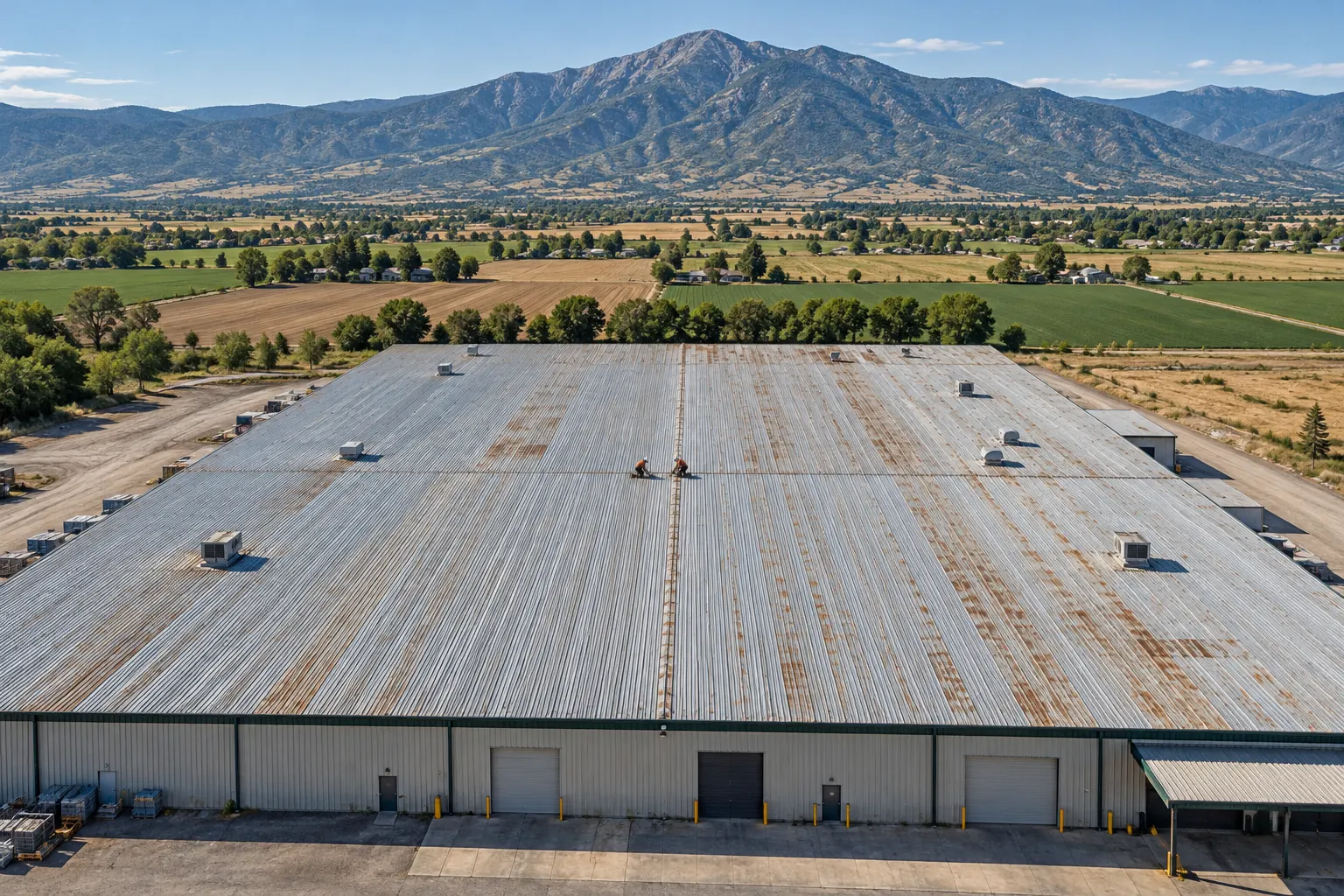
A steel shop with a low-slope office or storage addition has a joint where panel meets membrane. That transition flashing moves with the steel every hot afternoon and cold night, and it is where many Pima leaks begin.
Gutters on the taller metal roof often empty straight onto the flat addition below, so that membrane carries far more water than its size suggests.
Mixed buildings send mixed signals. These four come up on Pima properties.
Water marks show up along the wall or ceiling where the newer addition meets the original shop.
Transition flashing between the metal panels and the flat membrane has torn or pulled loose. We rebuild it with a flexible flashing that tolerates the movement.
Under the flat addition the ceiling leaks during heavy storms, while the shop next door stays dry.
The metal roof's gutter dumps onto the addition and overloads its drain. We reroute the downspout and repair the membrane where the water has been landing.
Orange streaks run down the inside walls of an older metal shop from the eave or the panel laps.
End laps and eave closures have failed at the low side. We reseal the laps, replace the closures, and treat the rust before it spreads.
Drips in a farm building leave muddy spots, a sign that field dust packed the gutter or scupper above.
Field and gin dust packs gutters and scuppers. We clear them, repair split gutter seams, and check the roof surface beneath for wear.
Fixing the joint and the runoff path usually stops a mixed-building leak without replacing either roof.
| Joint And Runoff Repair | Replacing One Roof | |
|---|---|---|
| What gets fixed | Transition flashing, gutters, and laps | The whole metal or flat section |
| The other roof | Left in service | Tied in again at the new edge |
| Runoff | Rerouted off the lower roof | Still lands there unless rerouted |
| Disruption | Short work at the joint | Longer work over one building |
| Best when | Both roofs are solid away from the joint | One roof has failed across its area |
Three services cover the mixed metal, flat, and farm buildings found around Pima.
Shops and barns with exposed-fastener steel roofs get fasteners, laps, and eave closures repaired, along with the transition to any flat addition.
Metal roof repair for Pima shops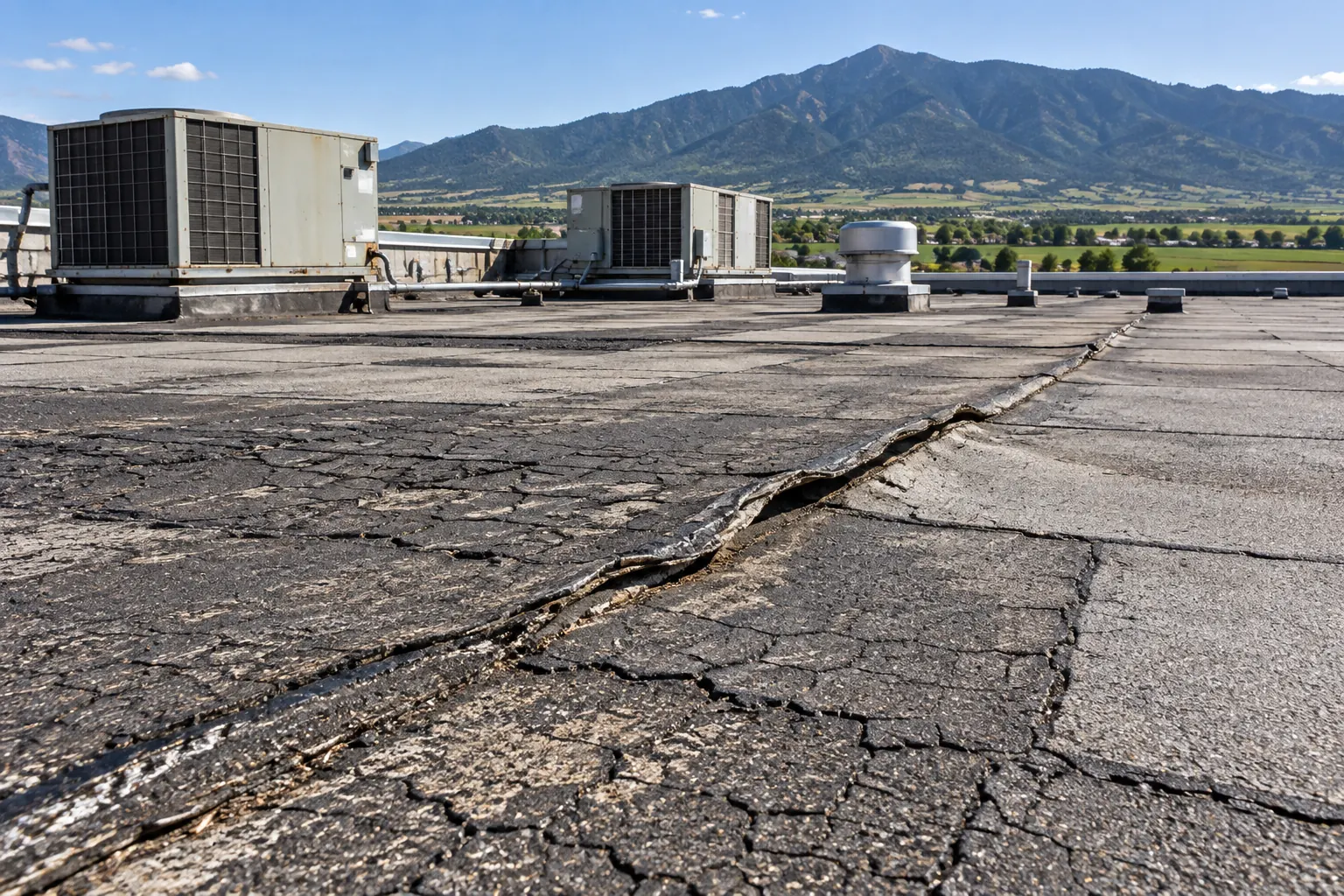
Low-slope additions, offices, and stores get seam, drain, and flashing repairs, plus protection where runoff from a taller roof lands.
Flat roof repair for Pima additions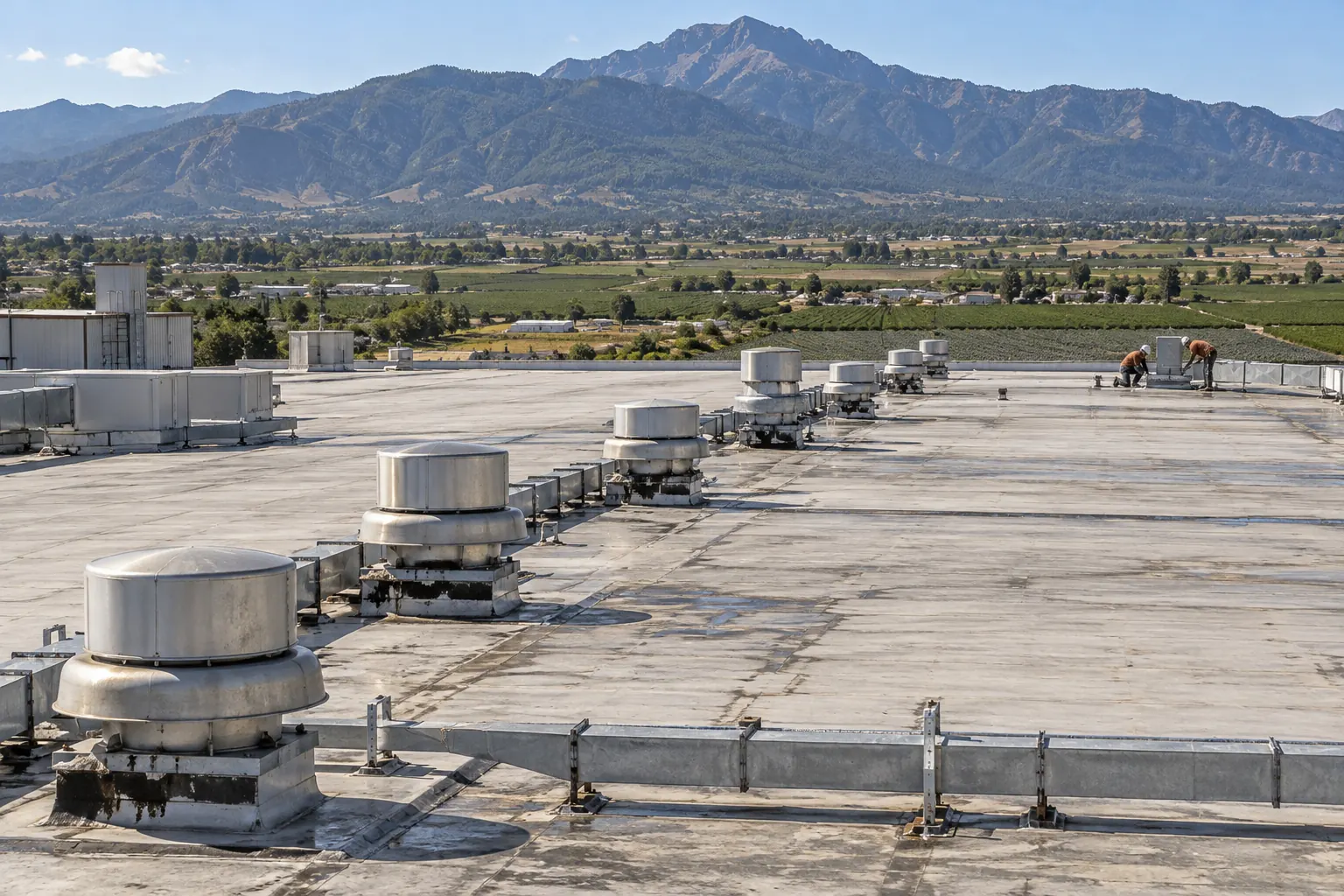
Processing and ag buildings with fans, dust, and equipment get sectional repairs planned around harvest and run schedules.
Industrial roof repair for Pima ag buildingsCall with a description of the buildings and which side leaks. The joint between an old roof and a new one is one of the first places we check.
Both roofs get checked, because the leak often starts on one and shows up under the other.
Both roof types get walked: the metal panels, the flat addition, the joint between them, and where every gutter and downspout empties.
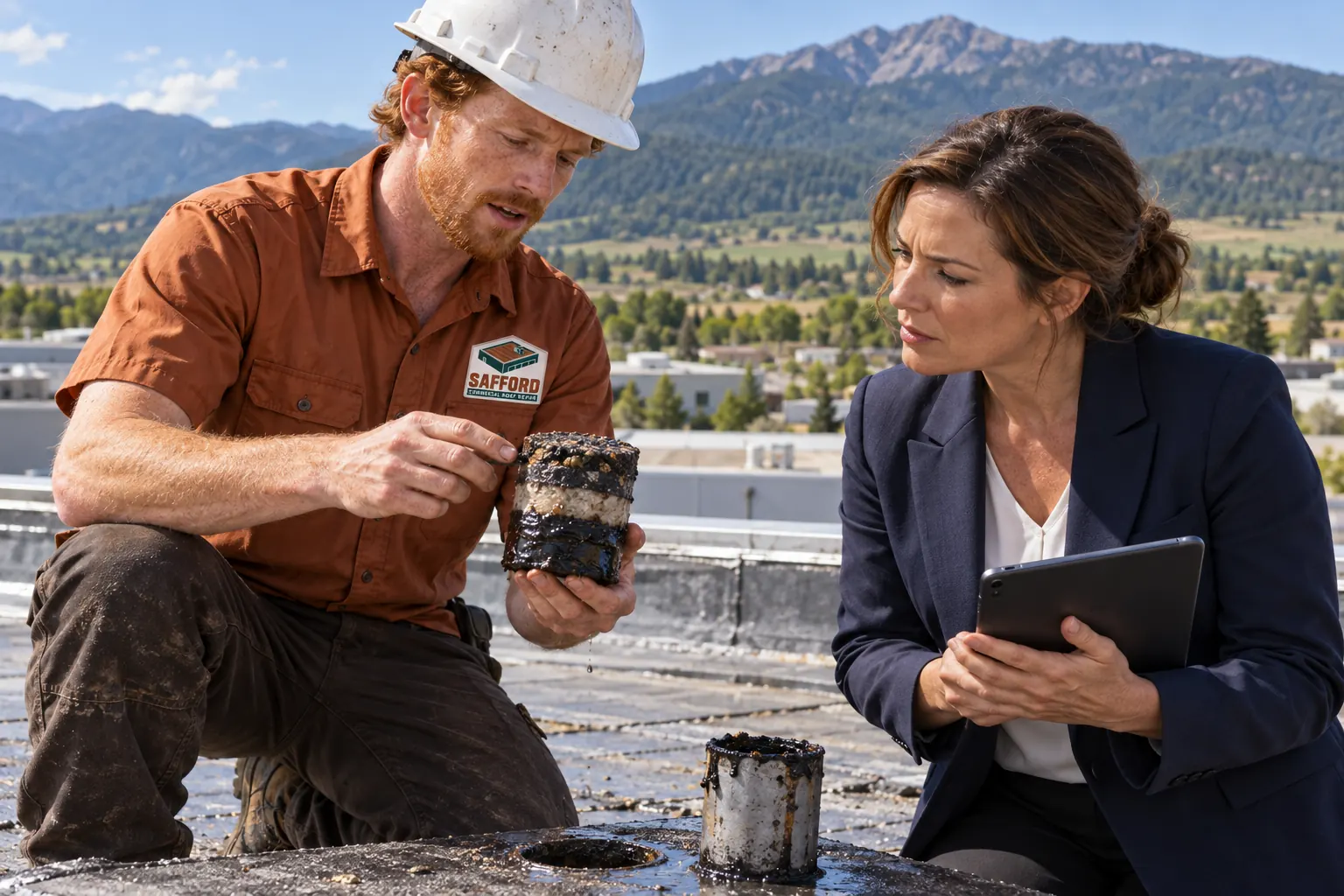
We trace where water from the taller roof lands, since an overloaded lower roof often leaks far from the joint itself.
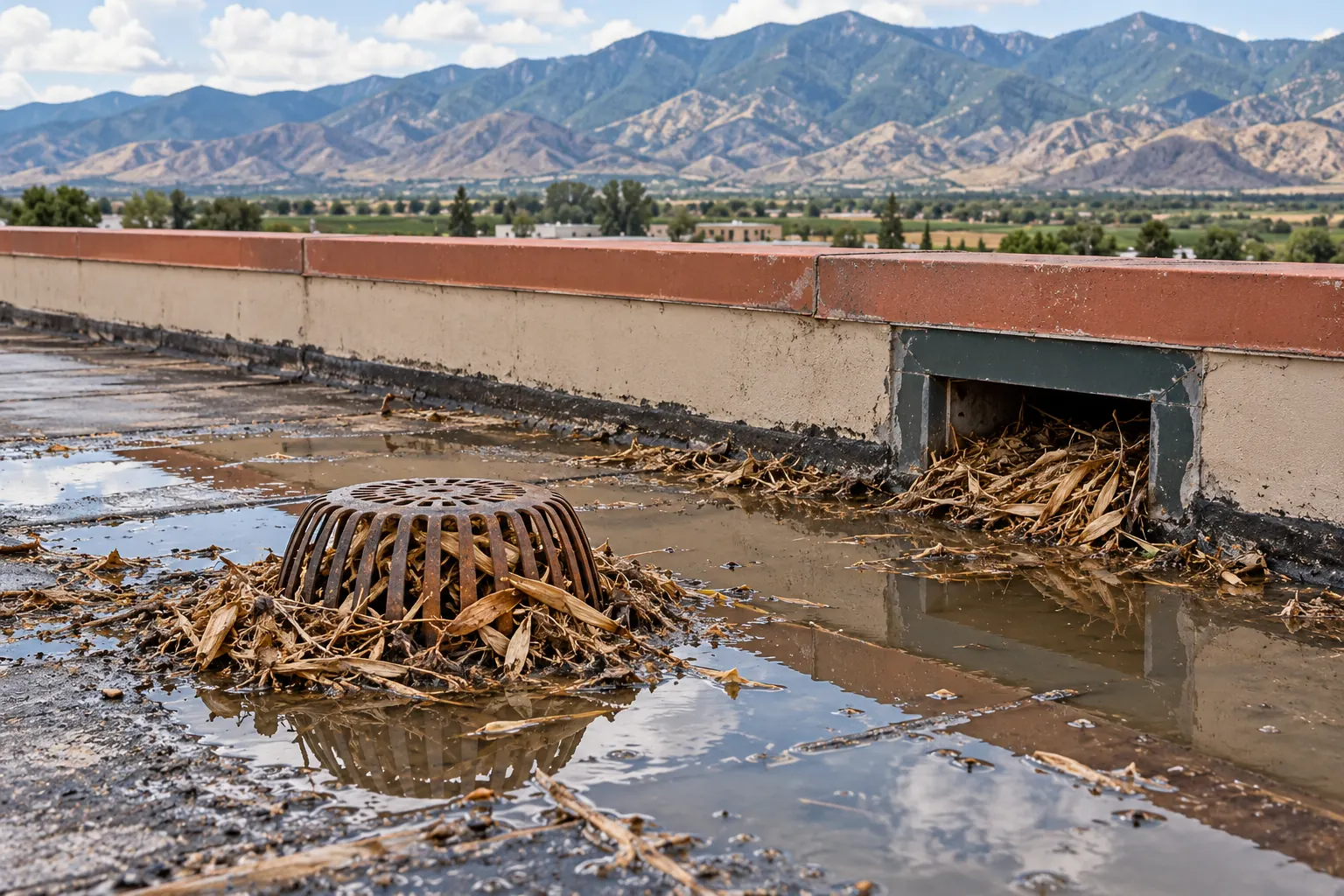
The flashing between panel and membrane is replaced with a flexible detail that moves as the steel expands and shrinks.
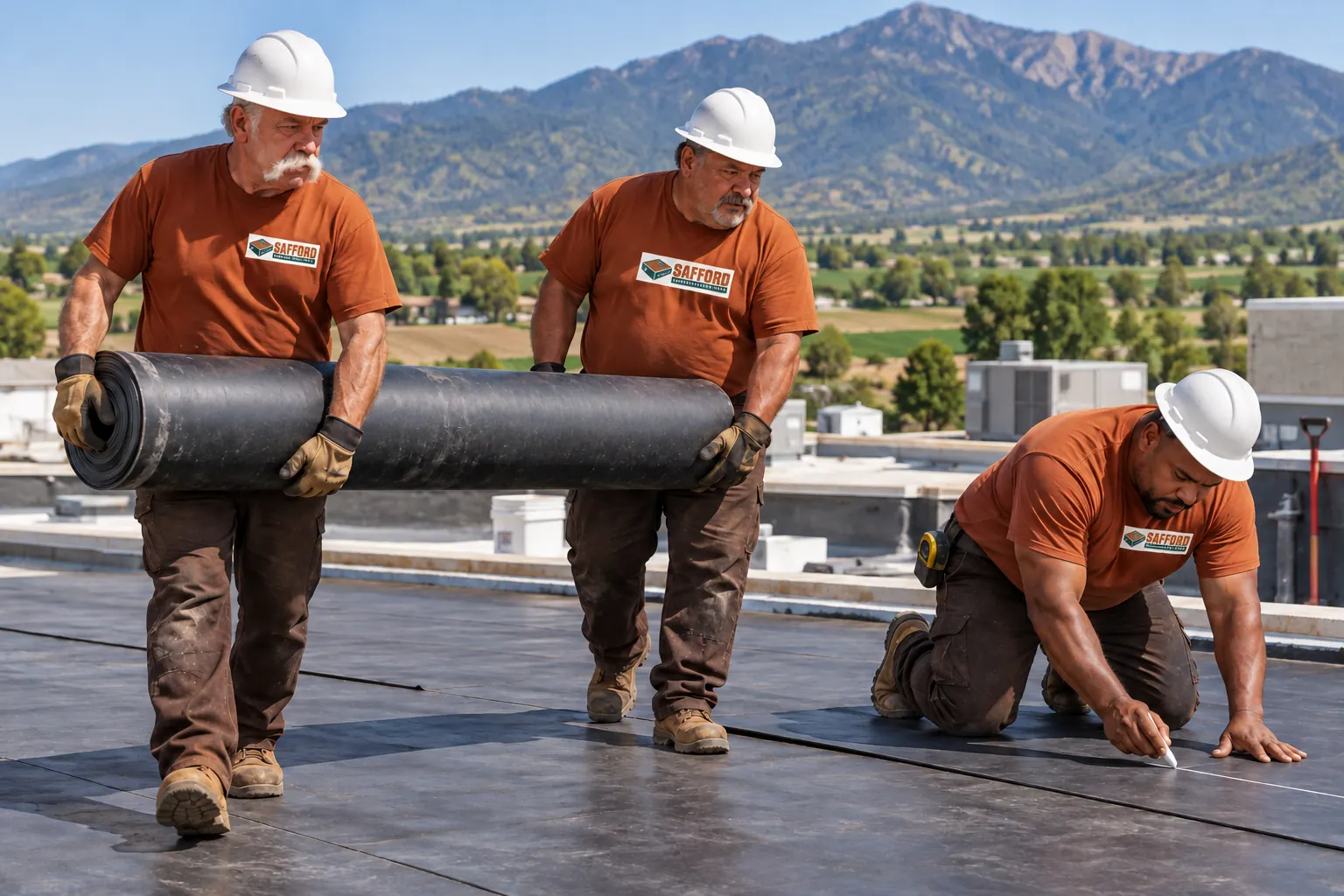
Metal laps and fasteners near the joint get resealed, and the flat roof seams and drain get repaired where runoff hit them.
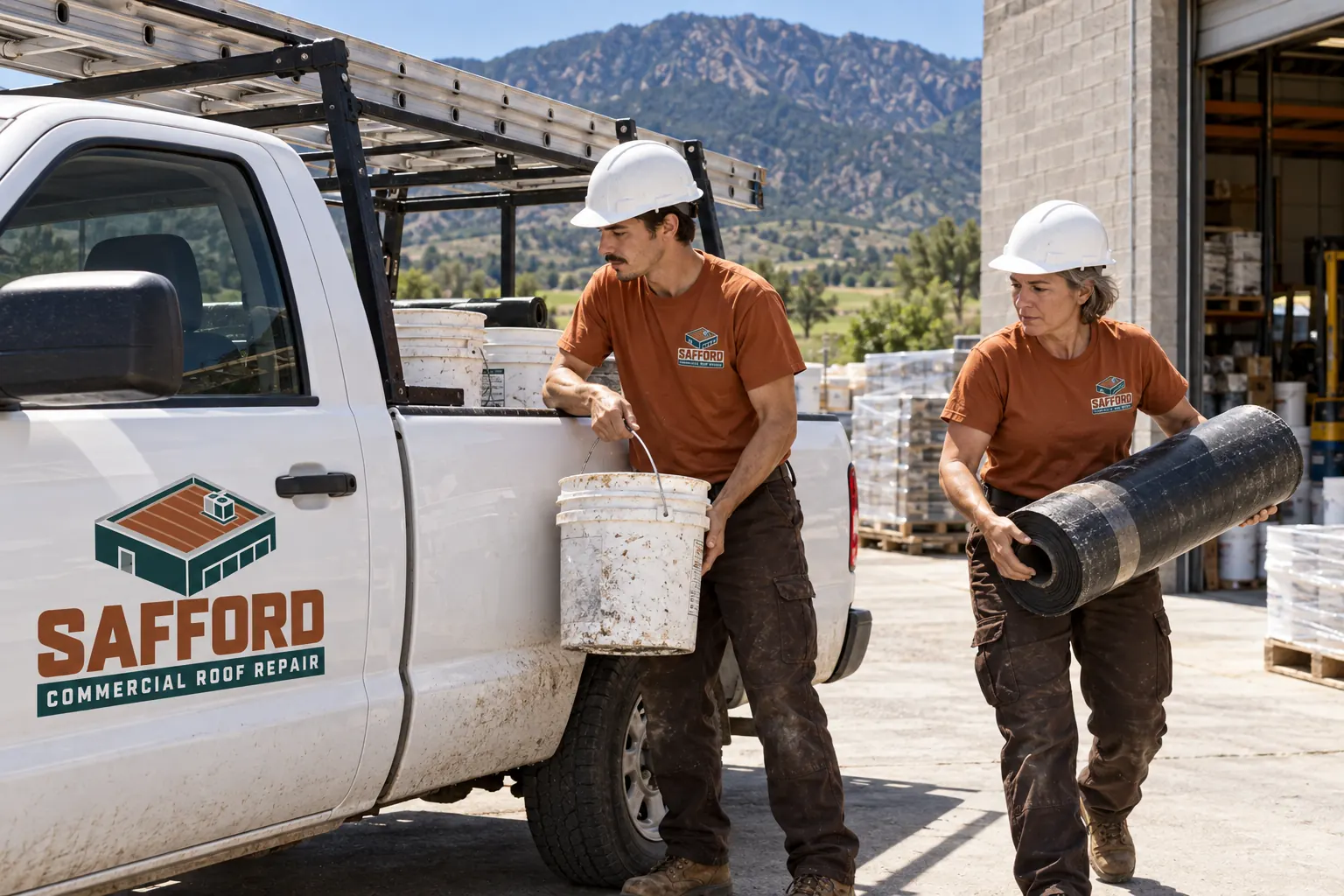
Downspouts are extended or rerouted off the addition, and you get photos of each change before we leave.
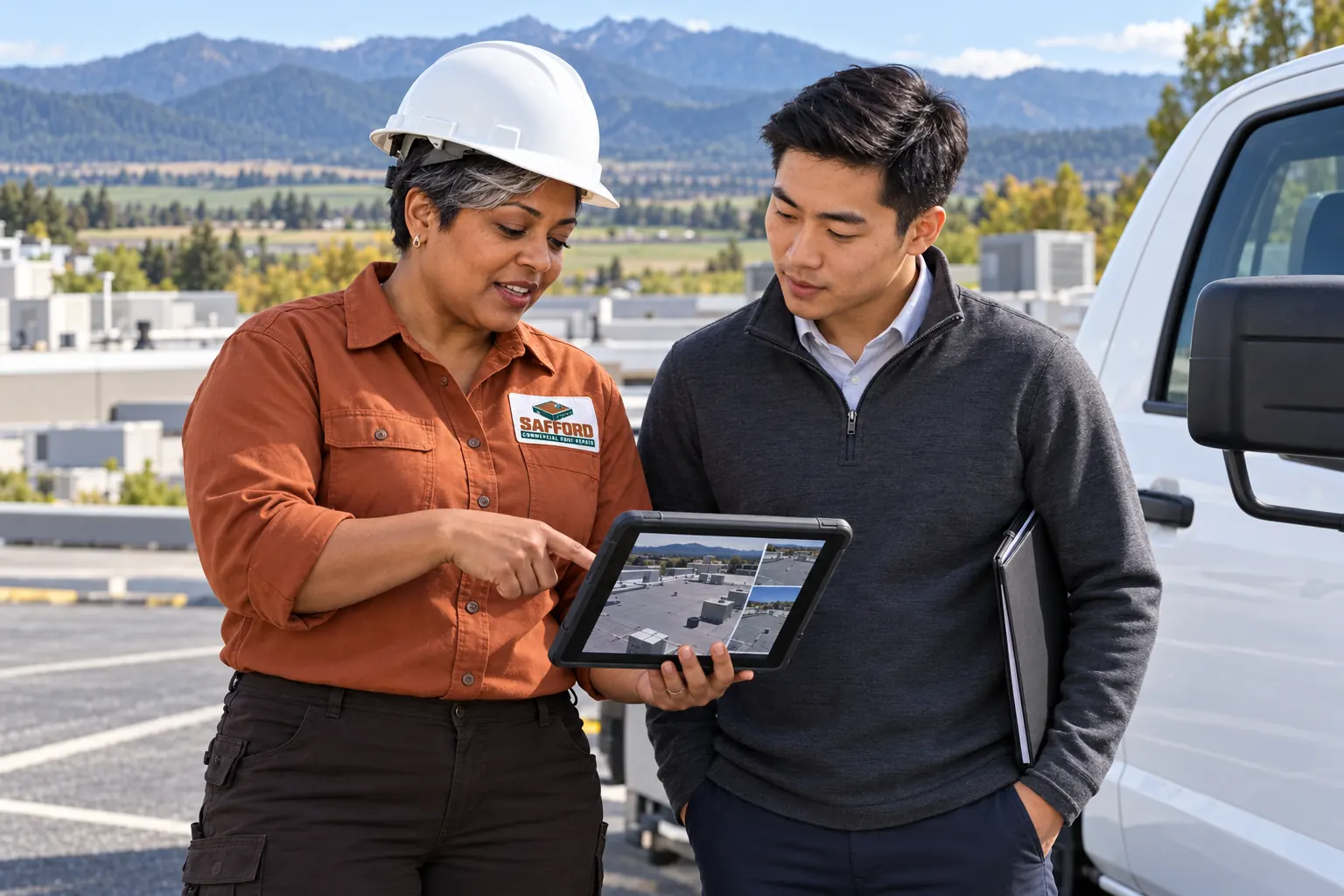
Pima is the westernmost town we cover on US 70.
The next town east on US 70, with older buildings where repairs keep the existing look.
Farther east, where storefront roofs with parapet scuppers make up most repair calls.
Across the valley to the east, with long metal ag roofs that dump runoff at the eave.
Down US 191 south of Safford, where shops need ladder or lift access set first.
Mixed buildings, farm roofs, and permits in Pima.
Dust, vibration, and exhaust residue cause most of them. Cotton gins, feed operations, and shops supporting copper mining collect fine debris that clogs gutters and scuppers and holds moisture against metal.
Machinery vibration loosens fasteners and cracks curb flashing, and oily residue from vents softens some membranes, so we check the surface downwind of every stack.
The Town of Pima, through its Planning and Zoning office. Call them before work that changes decking, parapets, or rooftop unit curbs, and we note anything in the repair plan they should hear about.
The metal building and the flat addition move differently in heat and cold. Rigid flashing or caulk at the joint cracks under that movement. A flexible transition detail lasts longer.
It is better to avoid it. Water from a large metal roof can overload a small flat roof drain and wear the membrane where it lands. Extending the downspout to the ground or a separate drain fixes it.
Yes, on commercial and farm buildings. Barns and equipment sheds with metal roofs get the same fastener, lap, and rust repairs as any shop roof.
Yes, at the repair area. Field and gin dust keeps sealant and tape from bonding, so the laps and seams being repaired get cleaned first.
Yes. Tell us your busy weeks, and non-urgent repairs on ag buildings get planned before or after them. A leak over stored crops or equipment gets handled sooner.
Request a free estimate for your Pima building. We check both roofs and the joint between them.