Stack And Fan Flashing
Hot exhaust stacks get heat-rated flashing and storm collars. Fan curbs get new flashing and fasteners suited to constant vibration.

Industrial roof repair in Safford for gins, processing plants, and mining-support shops. We repair roofs over running equipment, one section at a time, around your shifts.
Industrial roofs take hard use, and much of the damage stays local: around stacks, fans, and walkways. That kind of damage repairs well.
Plants usually see roof problems through production first: wet product, tripped equipment, or water on the floor.
Drips land near ovens, dryers, or a process line that runs an exhaust stack through the roof.
Stack flashing has split from heat and movement. We rebuild it with heat-rated flashing and a storm collar sized to the stack.
Water shows up beside fans, compressors, or presses whose curbs sit on the roof deck.
Vibration has cracked the curb flashing and loosened fasteners. We reflash the curbs and replace the fasteners with ones sized for the movement.
Floor puddles collect along loading doors and walls of gins, feed buildings, and shops after heavy storms.
Gutters and scuppers clogged with lint, feed dust, or fines overflow at the eave. We clean them out and repair the gutter seams and outlets.
Maintenance crews report soft or tacky membrane where they walk near certain vents.
Oily exhaust residue is softening the membrane. We check the surface downwind of every stack, replace damaged sections, and point out the vents depositing it.
Industrial repairs are planned around what runs below. These four types cover most plant roof work.
Hot exhaust stacks get heat-rated flashing and storm collars. Fan curbs get new flashing and fasteners suited to constant vibration.
Large roofs are repaired one section at a time, with only that area open, so production below keeps running while each part is finished.
Walkway pads go along the paths maintenance crews use, and skylights near the work get screened or marked before anyone starts.
Dust, lint, and fines get cleared from gutters, scuppers, and drains, and their seams and outlets are resealed so heavy runoff stays outside.
A planned repair keeps the plant running while the worst areas get fixed. Replacement means longer shutdowns of the areas below.
| Sectional Repair | Full Reroof | |
|---|---|---|
| Production | One roof section open at a time | Large areas covered or shut down |
| Exhaust fans | Shut off at agreed times | Off for longer stretches |
| Dust and debris inside | Kept to the work section | Spread across more of the building |
| Best when | Damage sits around equipment and walkways | The membrane or deck has failed broadly |
| Planning | Fits between runs and shift changes | Scheduled around a shutdown |
Tell us what is running below, your shift schedule, and which fans or stacks sit near the leak. We plan the repair around them.
Planning happens before anyone climbs up. These five steps keep production going while the roof gets fixed.
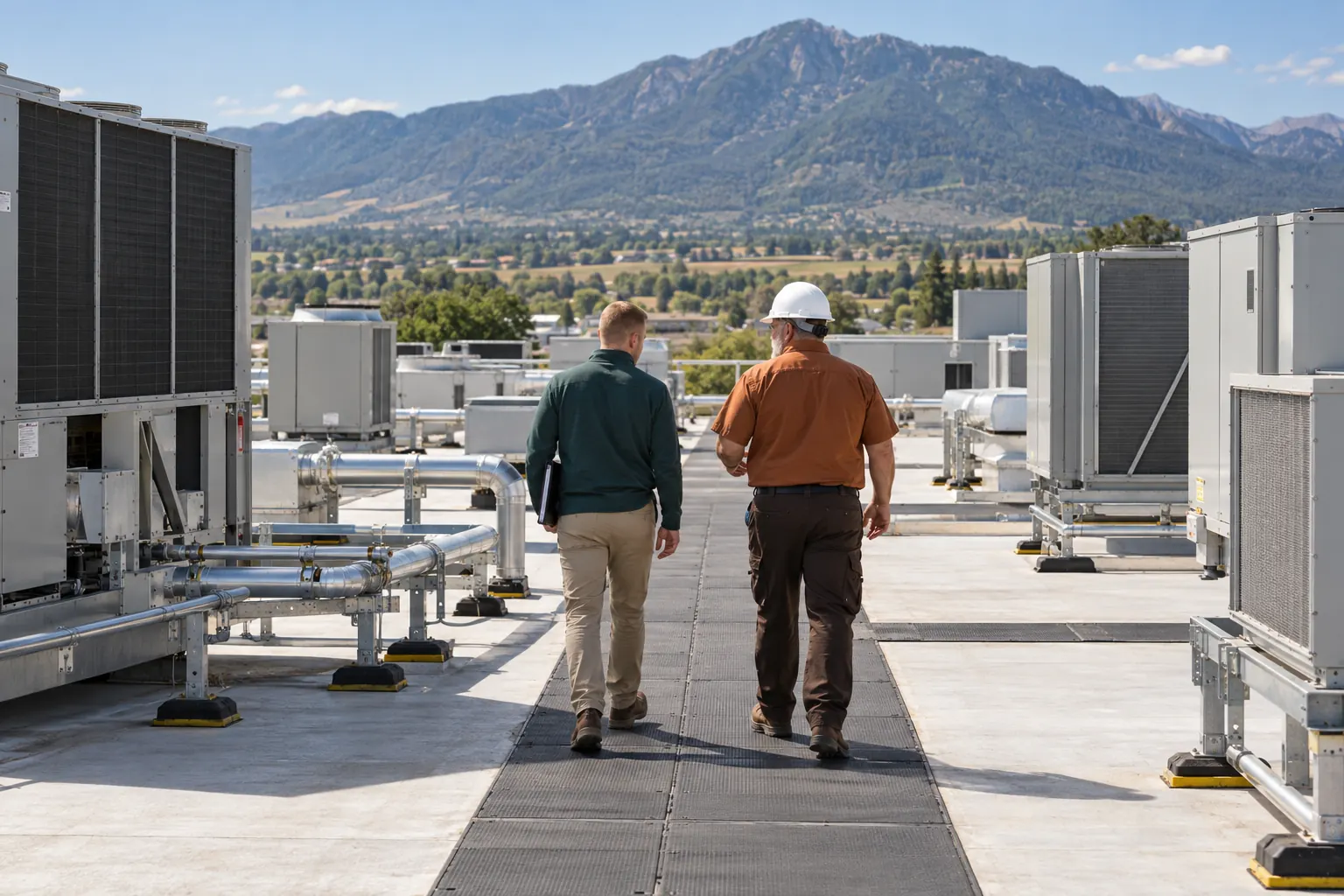
Walking the whole roof with your maintenance lead, we note stacks, fans, conveyors, skylights, and the paths crews use to reach equipment.
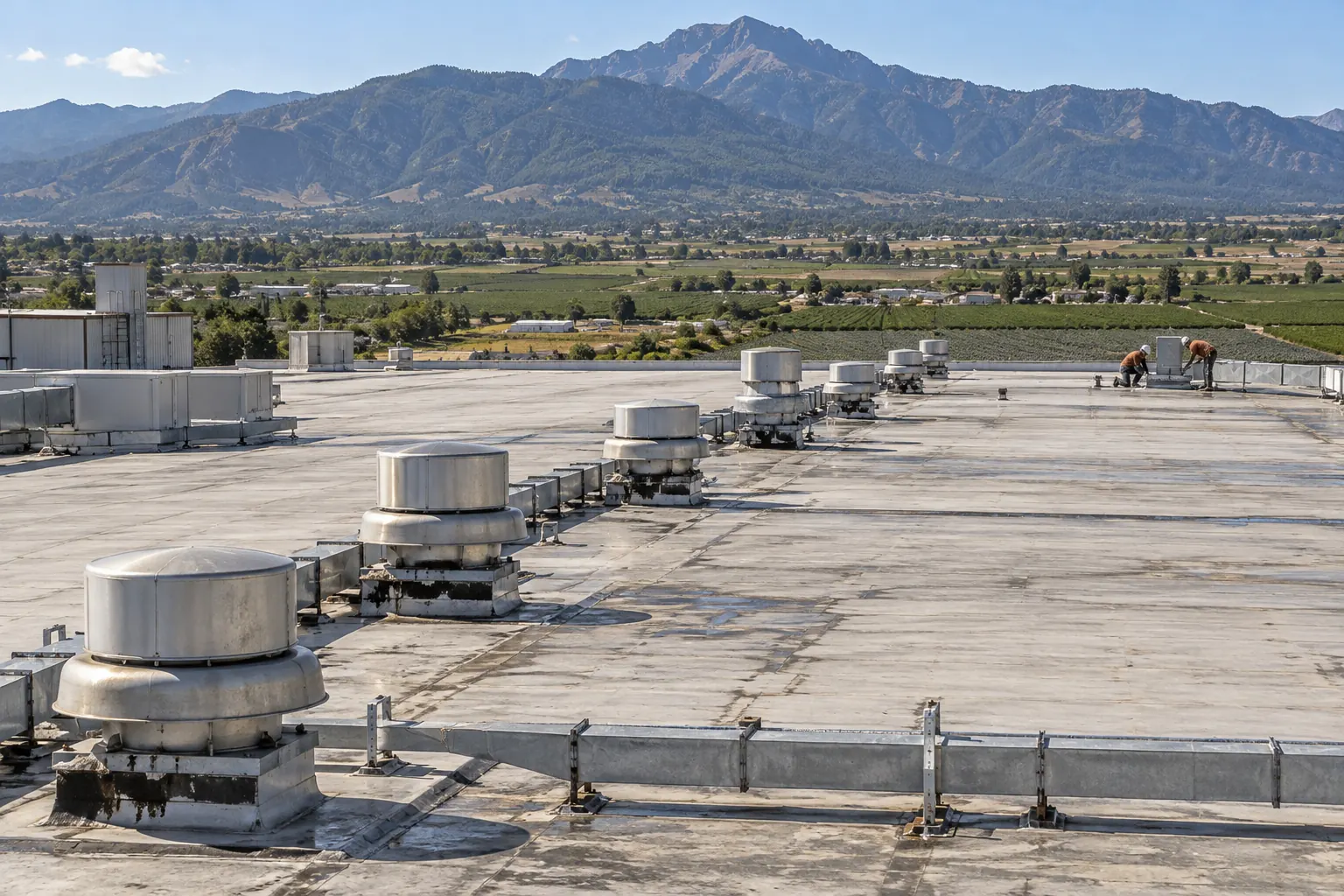
Together we set which roof fans shut down and when, which roof sections open on which days, and where trucks and forklifts need to pass.
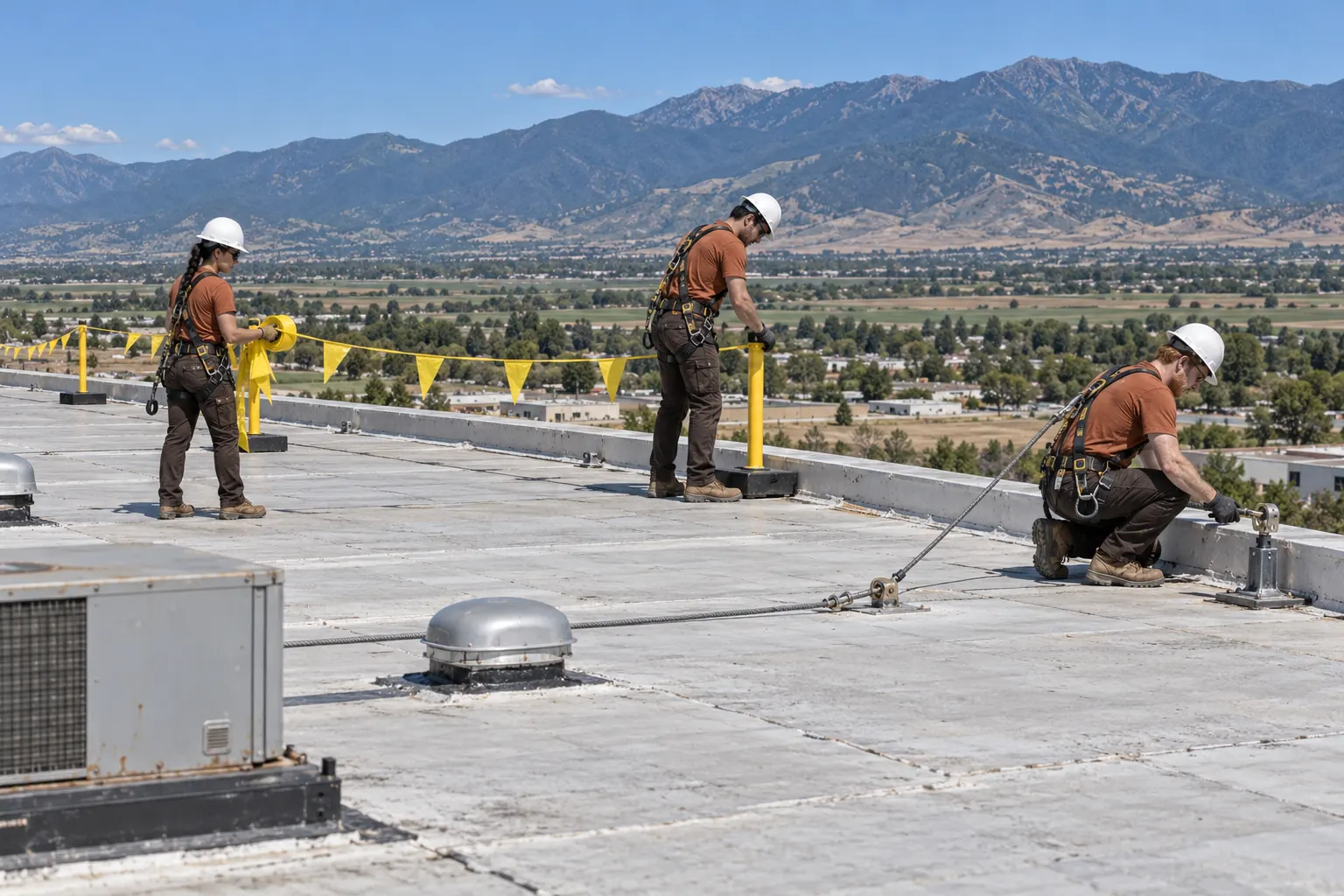
Skylights near the work get screened or marked, tie-off points are set, and material is staged clear of conveyors, cranes, and truck lanes.
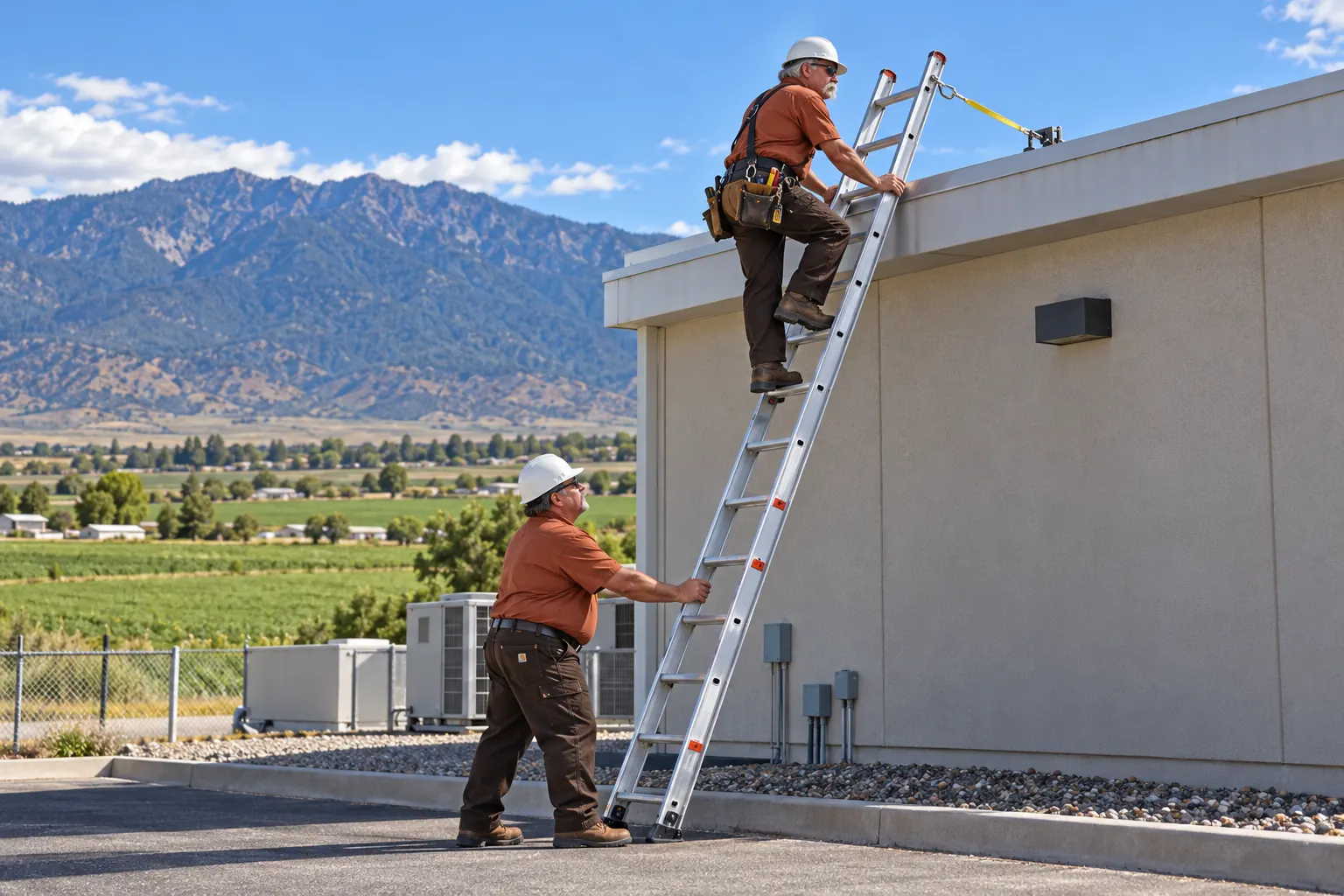
Each section is opened, repaired, and closed before the next one starts, so only one area of the roof is exposed at a time.
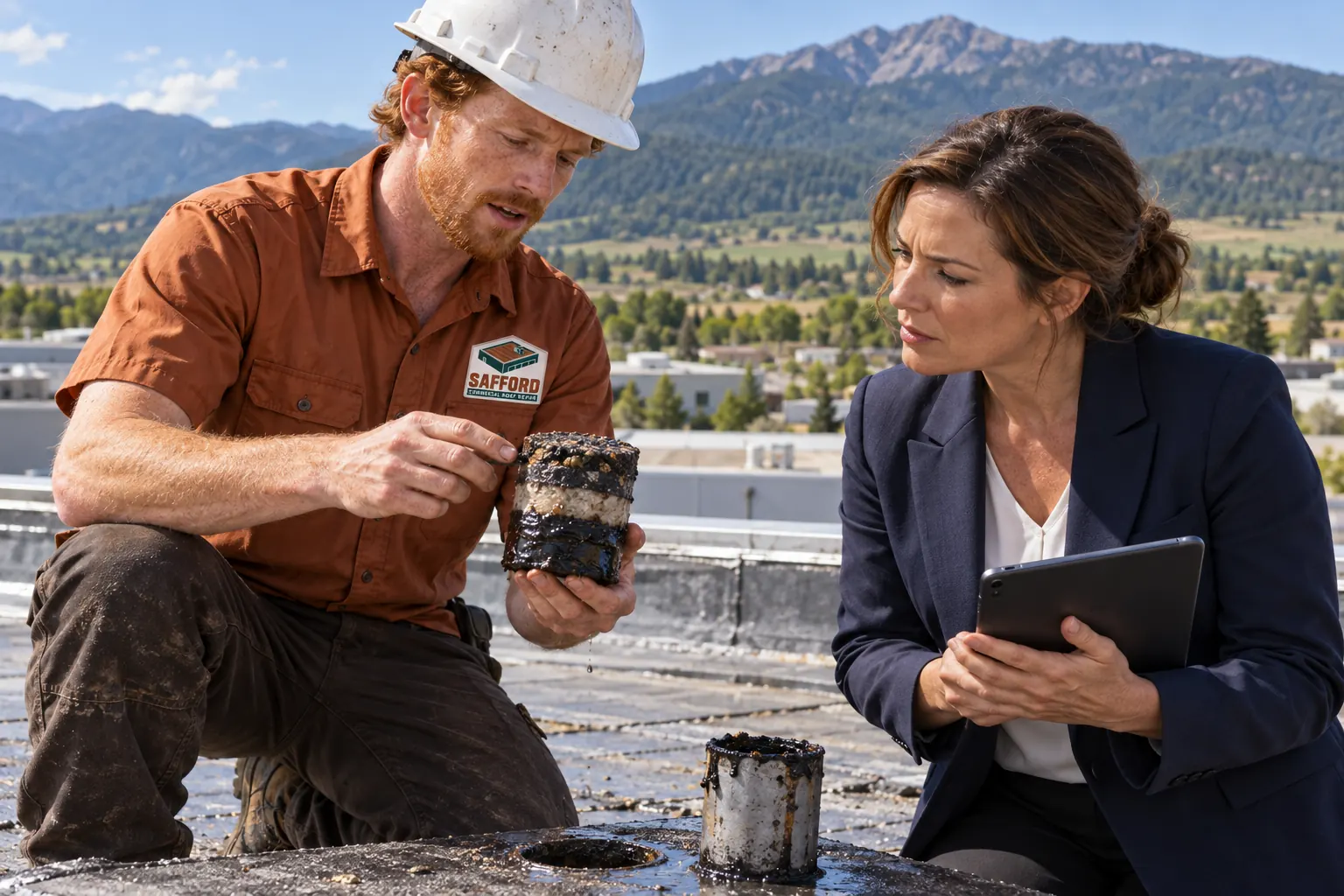
Fans go back on, the area is checked, and you get photos and notes for each section, plus any vents worth watching.

Industrial buildings often need one of these services too.
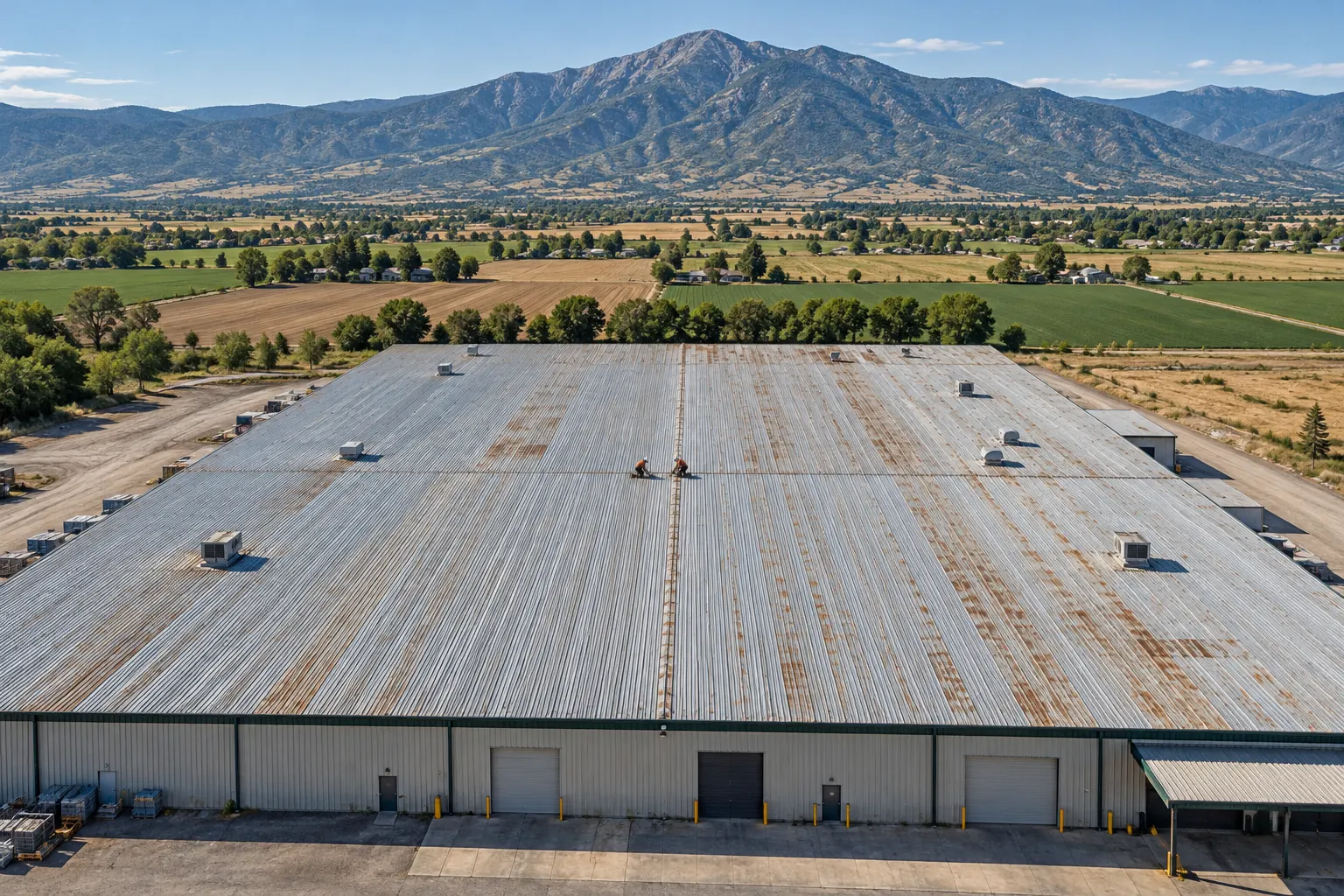
Many gins and processing buildings in the valley have metal roofs, where fasteners and laps loosened by vibration need the metal repair steps.
Commercial metal roof repair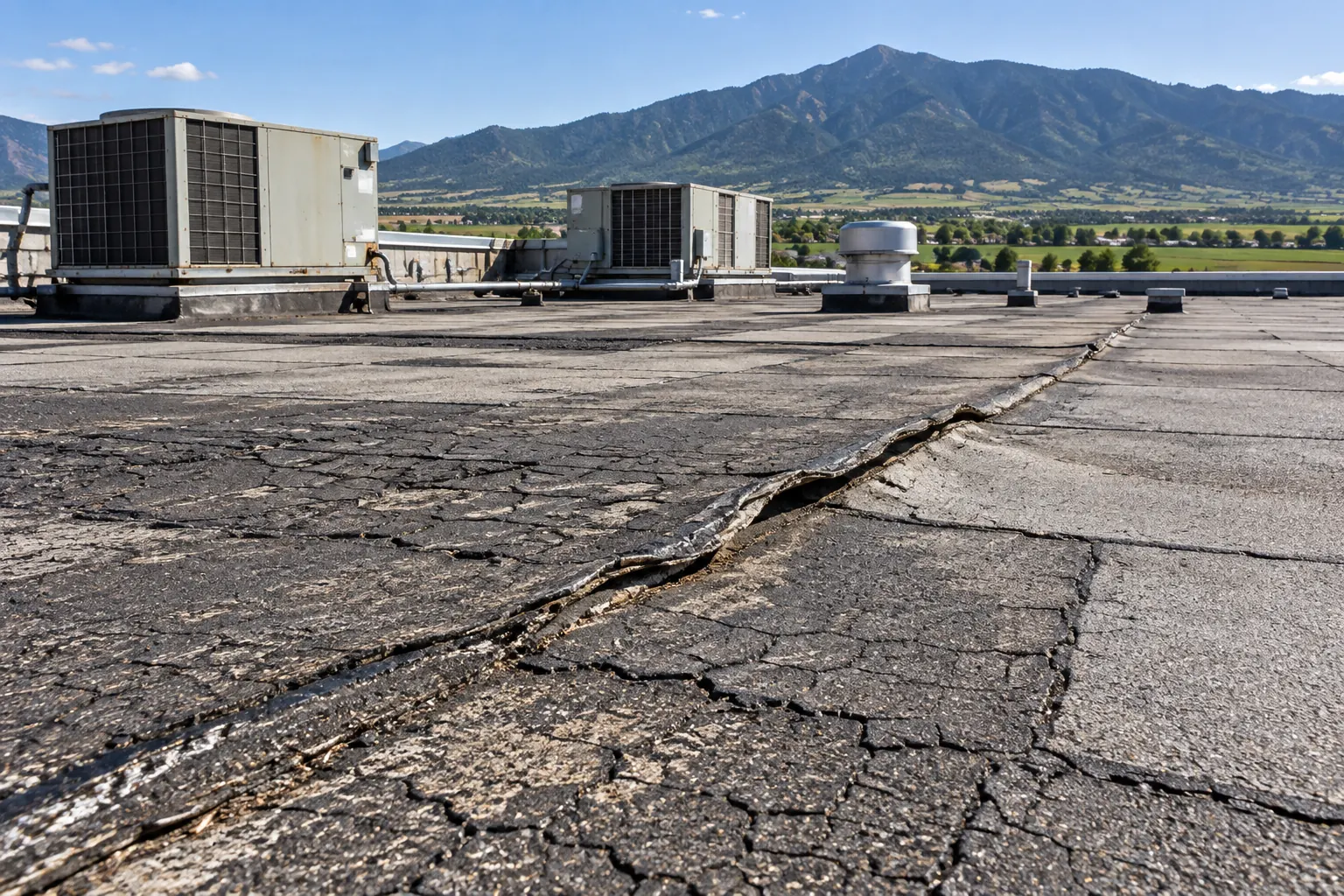
Plant offices and newer additions often sit under TPO or EPDM, and their seams and curbs follow the flat roof repair process.
Flat roof repairPlants, gins, and shops with equipment on and under the roof.
By planning around your equipment and shift schedule before anyone climbs up. That means shutting down exhaust fans near the work at agreed times, repairing one section at a time, keeping crews and material clear of conveyors, cranes, and truck lanes, and using heat-rated flashing at hot stacks.
Gin season and mining-support shift changes set the work windows.
Yes. Roof work on gins is easiest to schedule outside the busiest ginning weeks. An urgent leak during the season gets handled in short windows that fit your run schedule.
Vibration loosens fasteners and cracks curb flashing faster than on a quiet warehouse. Fans, compressors, and presses with roof curbs need their flashing checked more often than other details.
Yes, once the source is known. Oily residue from vents softens some membranes, so the damaged area is cleaned or replaced, and we point out which vents are depositing it.
Yes. Send your site rules and any sign-in or lockout steps before the visit, and the work plan is built around them. Skylights are screened or marked on every industrial job.
Yes. Shops, warehouses, and maintenance buildings that support mining work often have metal roofs with heavy dust and equipment loads. The same repair steps apply, scheduled around shift changes.
Request a free estimate and tell us what runs under the leak. We plan the repair around your equipment and shifts.