Upslope Tracing
Starting under the stain, the roofer checks each seam, curb, and penetration upslope on the roof, using the deck direction to follow where water would run.

Commercial roof leak repair in Safford that starts at the stain and works upslope to the opening. We trace the water path, repair the source, and test the fix.
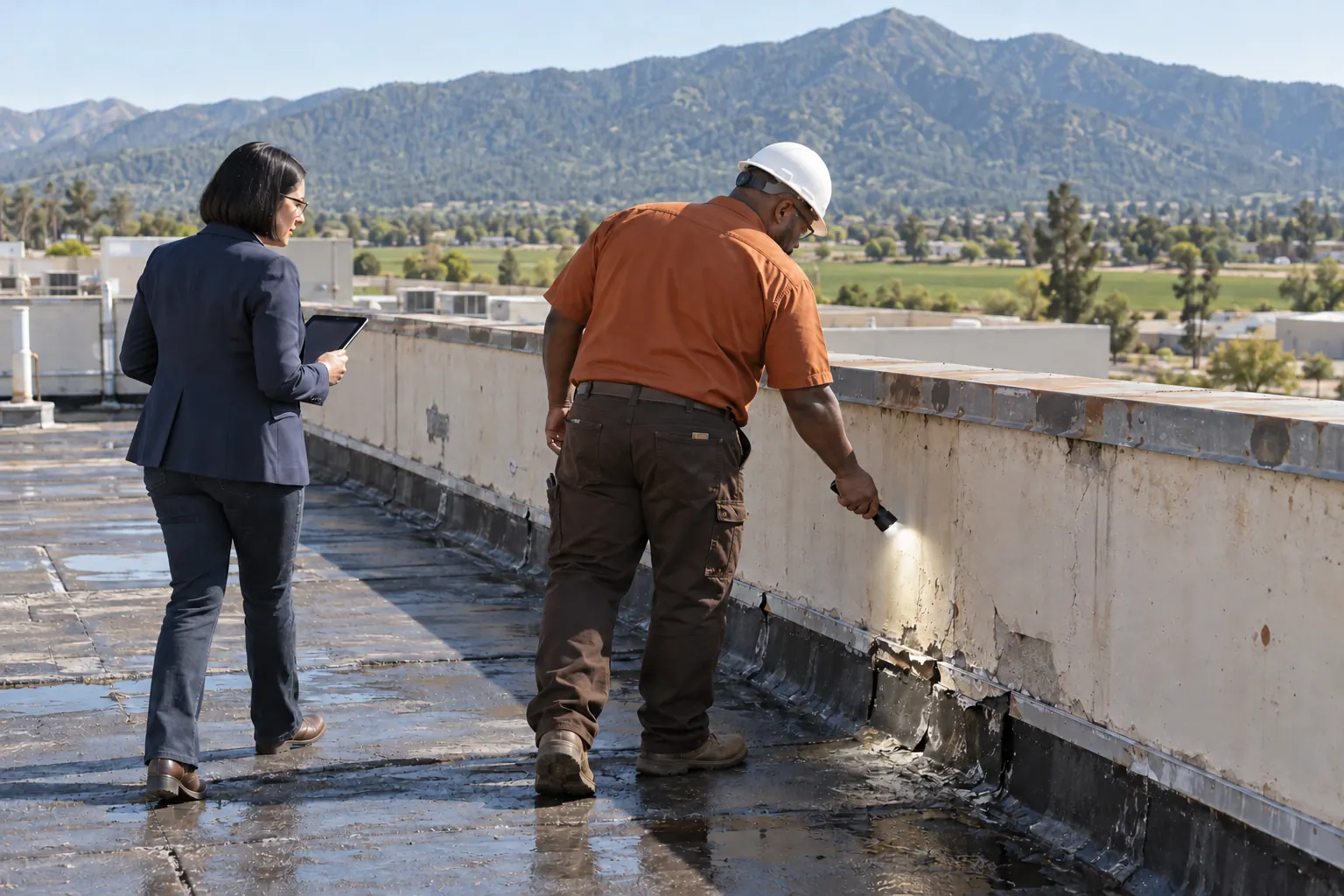
Almost every roof leak can be repaired once its source is found. These signs show whether it is a single opening or a wider roof problem.
Where water shows up inside, and when, narrows down where it gets in on the roof.
Ceiling damage sits under a plain stretch of roof with no unit, drain, or vent above it.
Water entered upslope and ran along deck flutes or a purlin. We walk upslope from the stain, checking each penetration and lap on the way.
Water appears during storms from one direction and stays away in calm rain, often along one wall.
Wind pushes water under coping, counterflashing, or a lifted lap. We check the windward edge first and seal the joints facing that direction.
Dripping keeps going long after the storm, or a stain grows for a day or two.
Water is stored somewhere: in wet insulation, a ponded low spot, or a clogged drain. We find and dry or replace that storage before sealing the opening.
Fresh drips appear near a unit within days of a technician working on it.
A dropped panel screw, a cut in the membrane, or disturbed curb flashing. We check around the unit, patch the damage, and add a walkway pad.
Finding the leak and stopping it are separate steps. These four cover both.
Starting under the stain, the roofer checks each seam, curb, and penetration upslope on the roof, using the deck direction to follow where water would run.
One small area at a time gets wetted with a hose while someone watches below. Testing in sections keeps a guess from turning into a second leak.
Compatible tape on an open seam, a cleared drain, or a weighted tarp holds water out until weather or production allows the permanent repair.
The opening is repaired in matching material, wet insulation along the water path is replaced, and the stain area is checked again after the next rain.
Fixing the actual opening costs less over time than patching where the stain appears and waiting for it to return.
| Source Repair | Patching Near The Stain | |
|---|---|---|
| Where the work goes | At the opening water uses | Over the area above the stain |
| Wet insulation | Found along the path and replaced | Left in place, still holding water |
| Return visits | Fewer, since the opening is sealed | Common, since the opening stays open |
| Proof | A water test and a next-rain check | Waiting to see if the stain grows |
| Records | Photos of the opening and the fix | A patch with no explanation |
Put a bucket under it, move stock or equipment away, and call. Tell us when the stain appeared and what was done on the roof recently.
Tracing comes before repairing. These five steps keep the fix on the real opening.
Inside first: the roofer notes the stain, the deck direction above it, and any units or drains nearby. Then the roof gets walked from end to end.
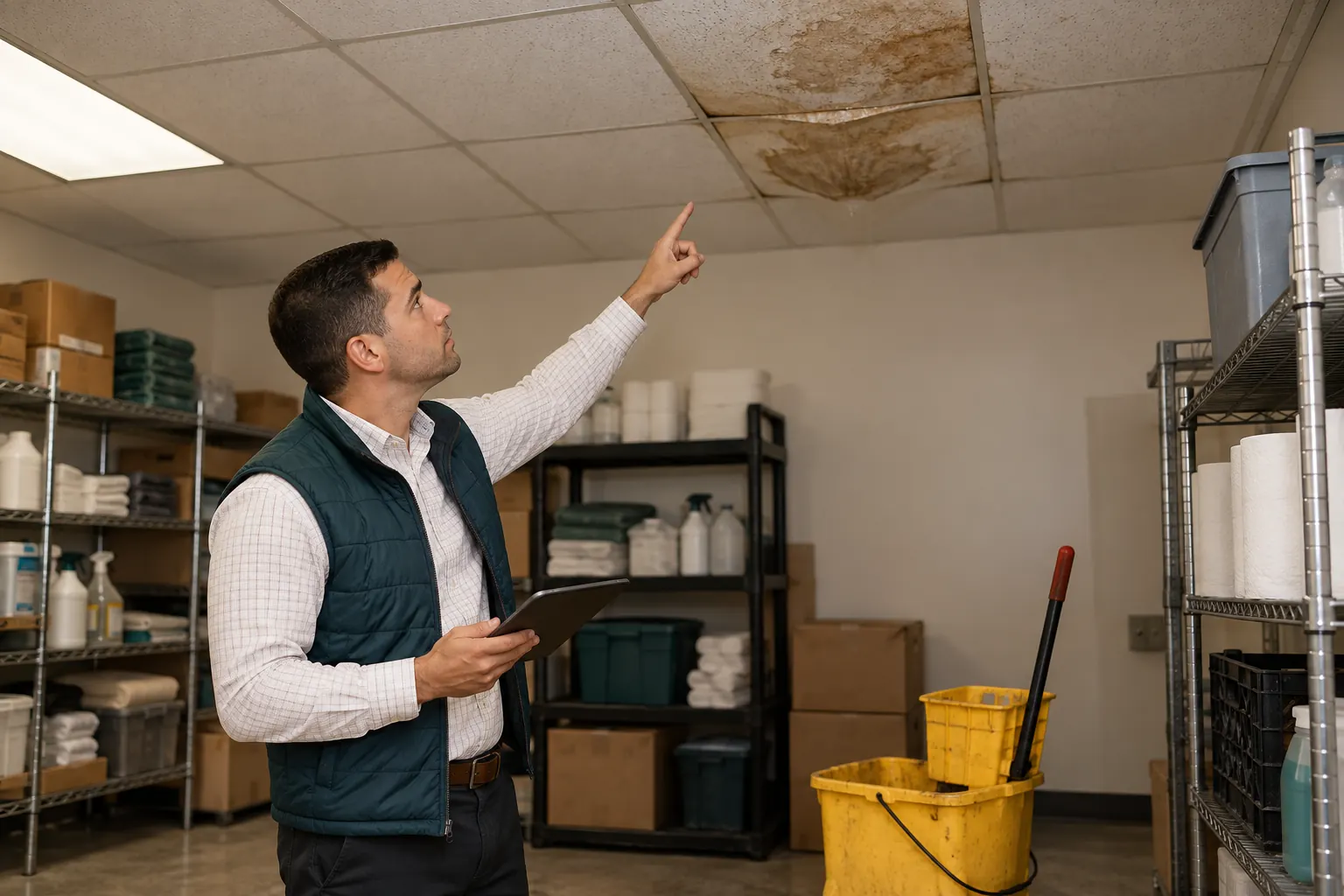
Starting above the stain, we work upslope along flutes, purlins, and seams, checking every curb, drain, and pipe boot on the way.

Suspect spots get water-tested in sequence while someone watches inside. When the stain wets again, the source is confirmed.
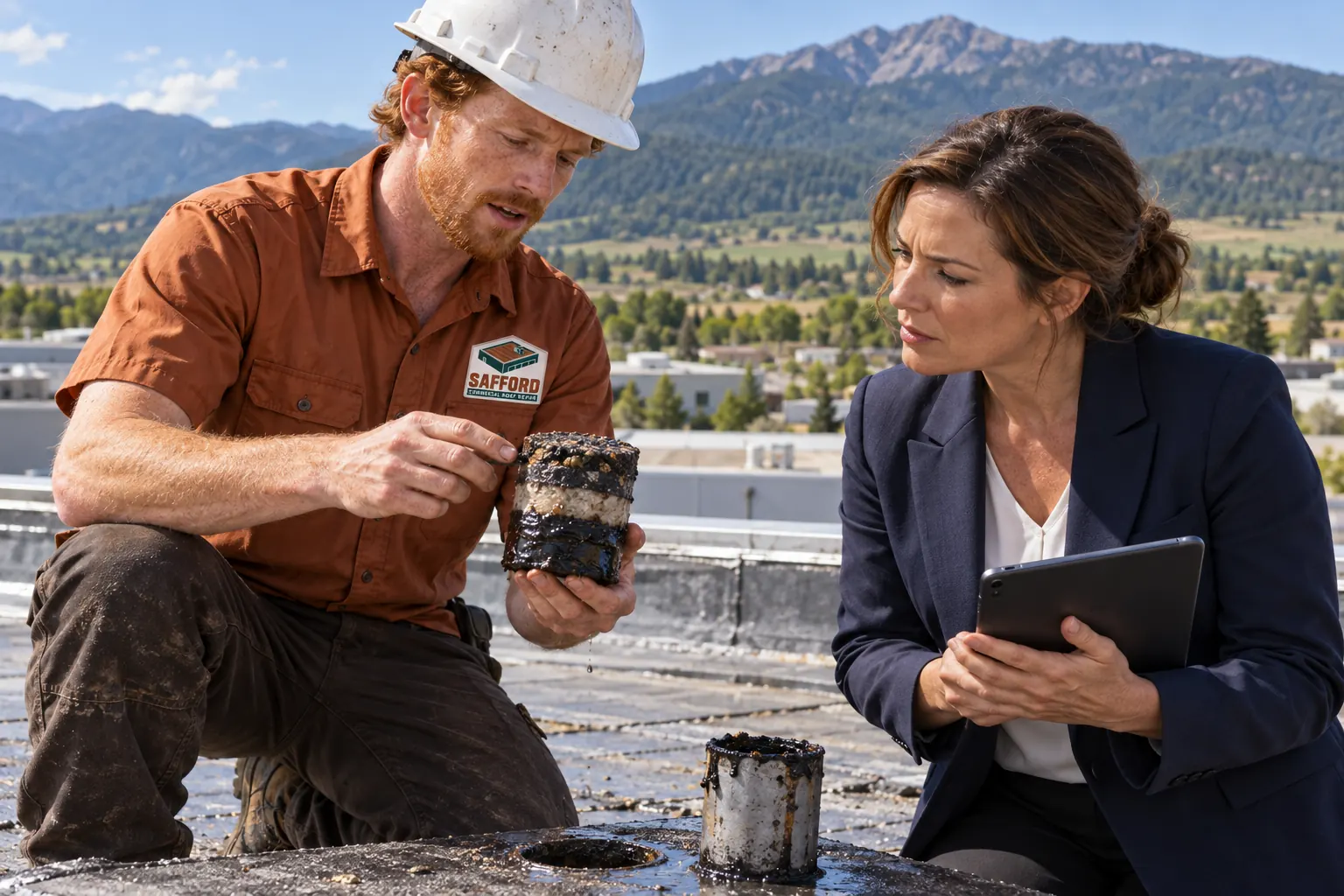
Matching material goes on at the opening, and any wet insulation along the water path is cut out and replaced.
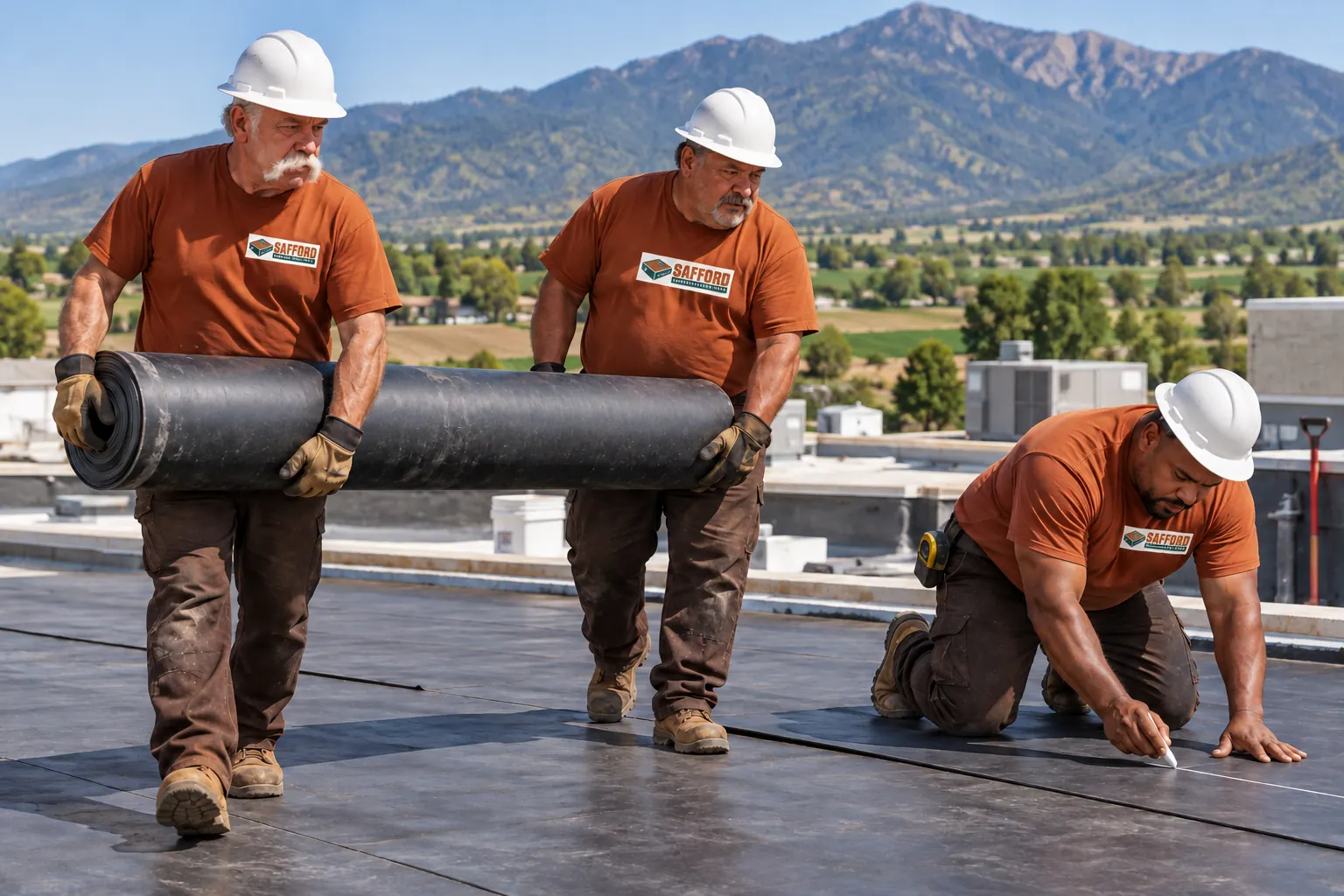
We ask you to look at the stain after the next real rain and send a photo, and we return to the roof if it shows water again.

Once the source is found, the repair itself often falls under one of these.
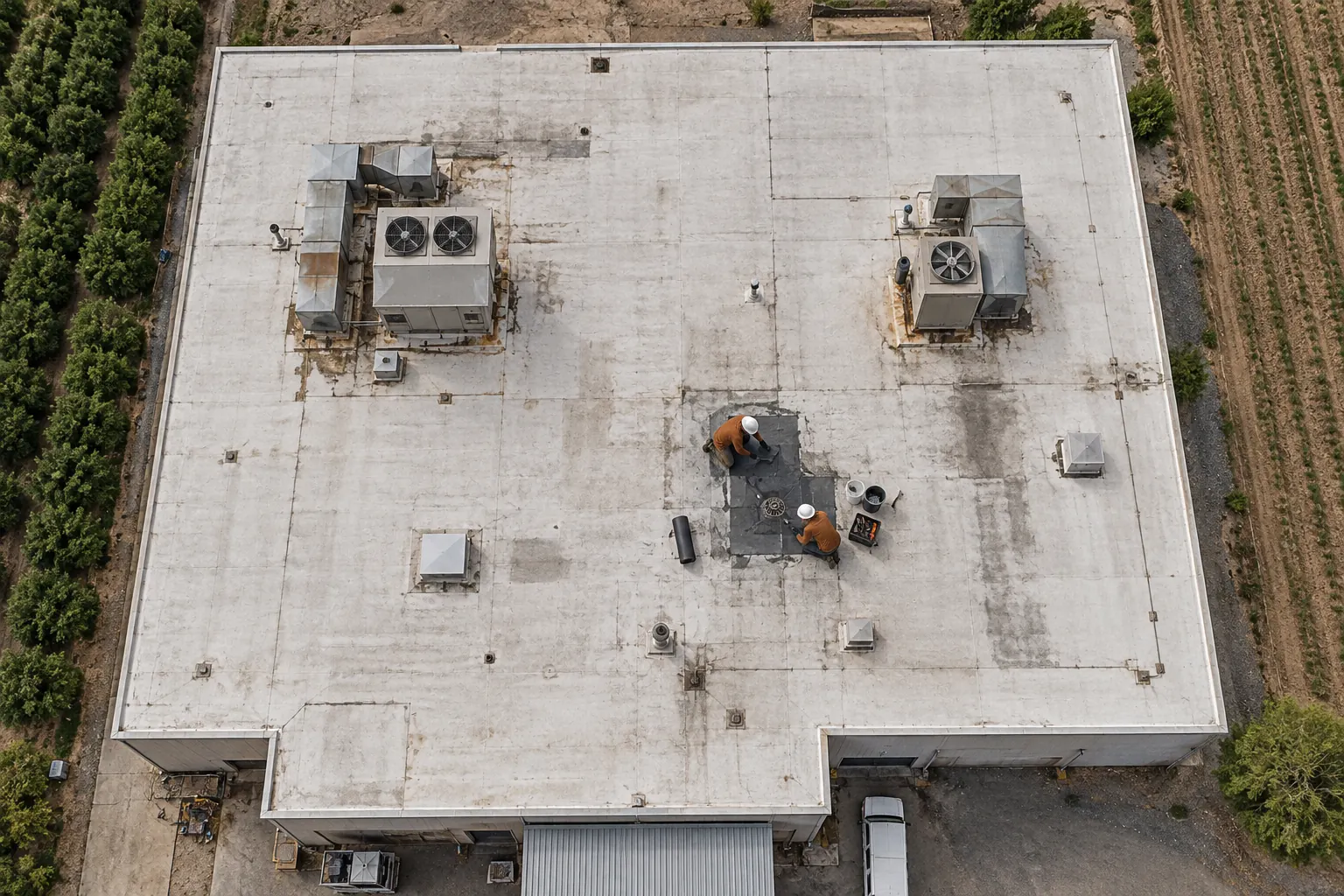
Most traced leaks on Safford storefronts end at a flat roof seam, drain, or curb, and the fix follows the flat roof repair steps.
Flat roof repair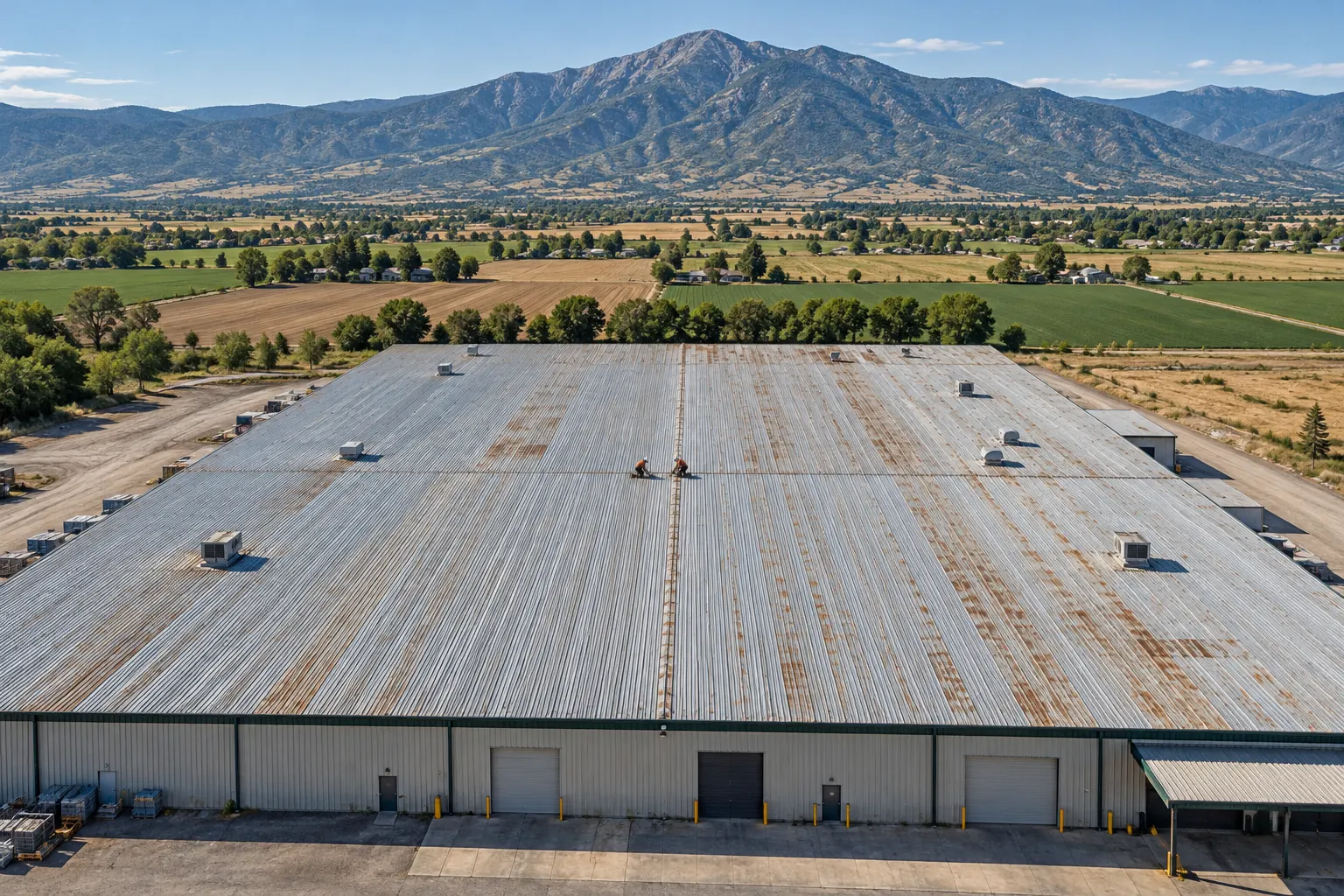
On shops and ag buildings the trail usually ends at a fastener or lap, which the metal roof repair work closes up.
Commercial metal roof repairTracing, testing, and why leaks come back.
Water travels before it drips. It gets in at a seam or flashing, then runs along deck flutes, insulation joints, or a purlin to a low point or a fastener hole. A stain over a break room can start at a curb 30 feet away.
Tracing means walking upslope from the stain, checking each penetration, and water testing small areas one at a time.
Usually, yes. Water testing recreates rain on one small area at a time, and dry roofs often show the opening plainly: a lifted lap, a cracked boot, a gap in curb flashing. Moisture readings show where water is stored under the membrane.
Both. Catch the water, move stock and equipment, and take a dated photo of the stain. Then call. A few photos of the stain growing help us judge how much water is getting in.
The patch most likely went over the stain area instead of the opening. Water kept entering upslope and found a new way down. Tracing from the stain to the real source stops the cycle.
Both happen. Gusts lift edge metal and tear membranes, which is new damage. Heavy downpours also overload drains and push water over seams that were already weak, so an old problem shows up for the first time.
Yes, especially in metal buildings on cold winter mornings. Drips that appear on clear, cold days with no rain point to condensation. We check for that before opening up the roof.
Request a free estimate and tell us where the stain is. We trace it to the opening and repair the real source.