TPO Seam And Patch Welding
Hot-air welding bonds new TPO to old once the surface is scrubbed and prepped. Seams that fail a probe get rewelded or covered with a welded strip.

Flat roof repair in Safford for TPO, EPDM, and built-up roofs on storefronts, offices, and clinics. We fix seams, drains, curbs, and parapet flashing with matching membrane.
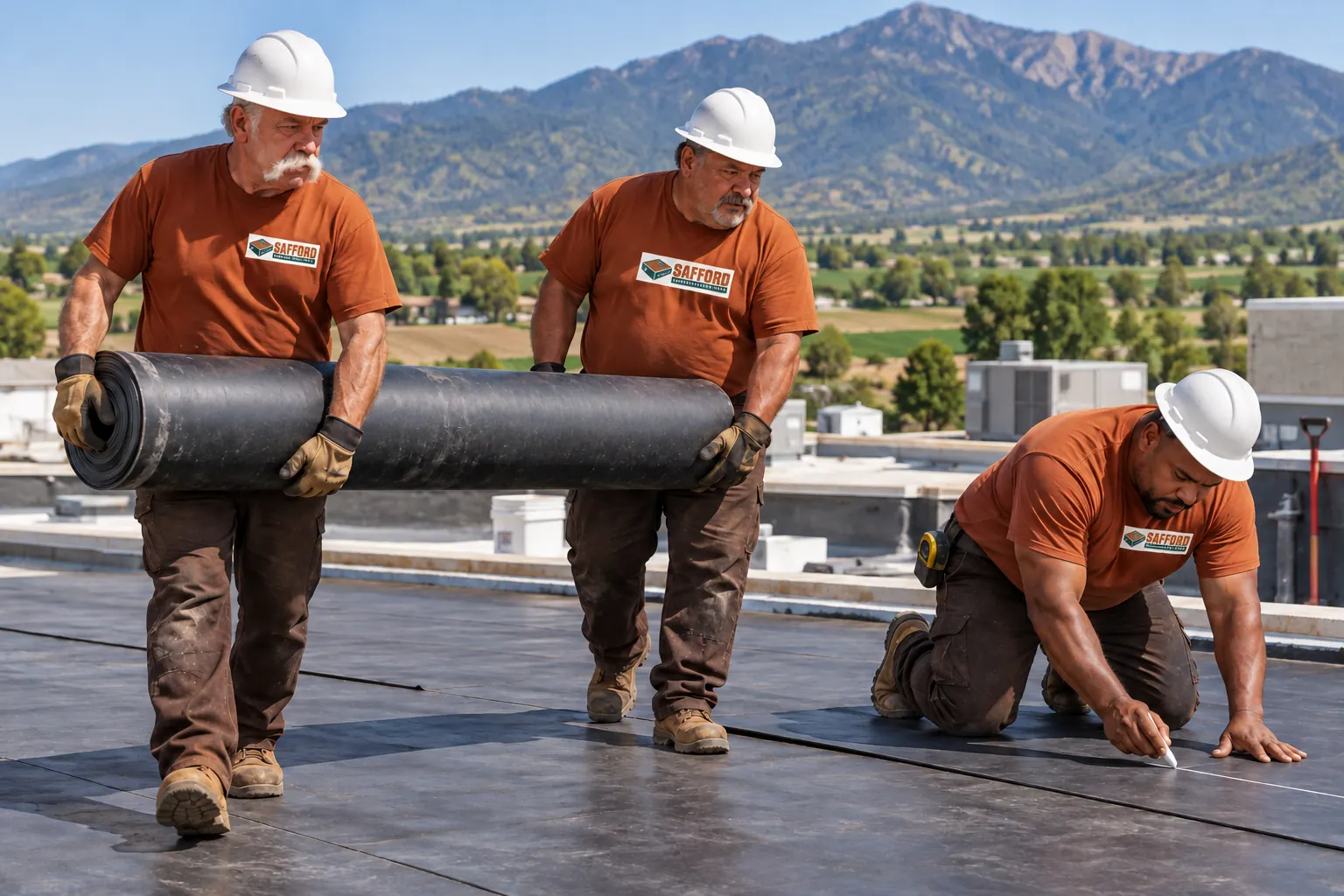
A flat roof is worth repairing when the trouble sits at its details and the field of the roof still holds up.
These four show up most on Safford flat roofs. Each one starts with a sign inside the building.
Ceiling tiles go brown in the room under a package unit or evaporative cooler, often soon after the unit was serviced.
Curb flashing has cracked or pulled loose, or a dropped panel screw punctured the membrane. We reflash the curb in matching membrane and add a walkway pad at the service side.
Damp drywall or a stain line where the wall meets the ceiling, worst after storms that blow from one direction.
Base flashing at the parapet has split, or the coping joints above it have opened. We rebuild the base flashing and seal or replace the coping joints.
Drips near a column line or a drain leader, sometimes with a gurgle in the pipe while it rains.
The drain clamping ring is loose or the membrane around the bowl has torn. We reset the ring, replace the membrane around the bowl, and clear the strainer.
New drips appear in more than one room at the end of summer, often along a straight line across the ceiling.
Seams have opened from daily heat cycling. TPO seams get cleaned and rewelded, EPDM seams get new primer and tape, and built-up laps get bitumen and fabric.
The repair depends on what the membrane is and what failed. These are the four we use most.
Hot-air welding bonds new TPO to old once the surface is scrubbed and prepped. Seams that fail a probe get rewelded or covered with a welded strip.
EPDM seams are cleaned, primed, and closed with seam tape. Splits and punctures get a primed cover patch with rounded corners so the edges stay down.
Gravel built-up roofs and modified bitumen sheets get cut-and-patch repairs in bitumen, with the gravel set back over the patch to shade it from the sun.
Pipe boots, pitch pans, curbs, and parapet base flashing fail before the field does. They get rebuilt in the same membrane as the rest of the roof.
If the membrane is still flexible and the insulation is dry, repair keeps the roof working with far less disruption than a tear-off.
| Flat Roof Repair | New Flat Roof | |
|---|---|---|
| Work area | The failed seams, drains, and curbs | The entire roof down to the deck |
| Noise and odor | Short spells of welding or primer work | Days of tear-off and installation |
| Insulation | Wet boards replaced where found | All insulation replaced |
| Drainage | Drains cleared and reset with the repair | Tapered insulation can be redesigned |
| Best when | The membrane folds without cracking | The membrane is brittle or wet underneath |
Tell us which room the drip is in and roughly where the unit sits on the roof. That is enough to plan the inspection.
Five steps on every flat roof job, from probing seams to flood-testing the repaired area.
We probe every seam, check each drain and curb, and look for soft spots that point to wet insulation under the membrane.
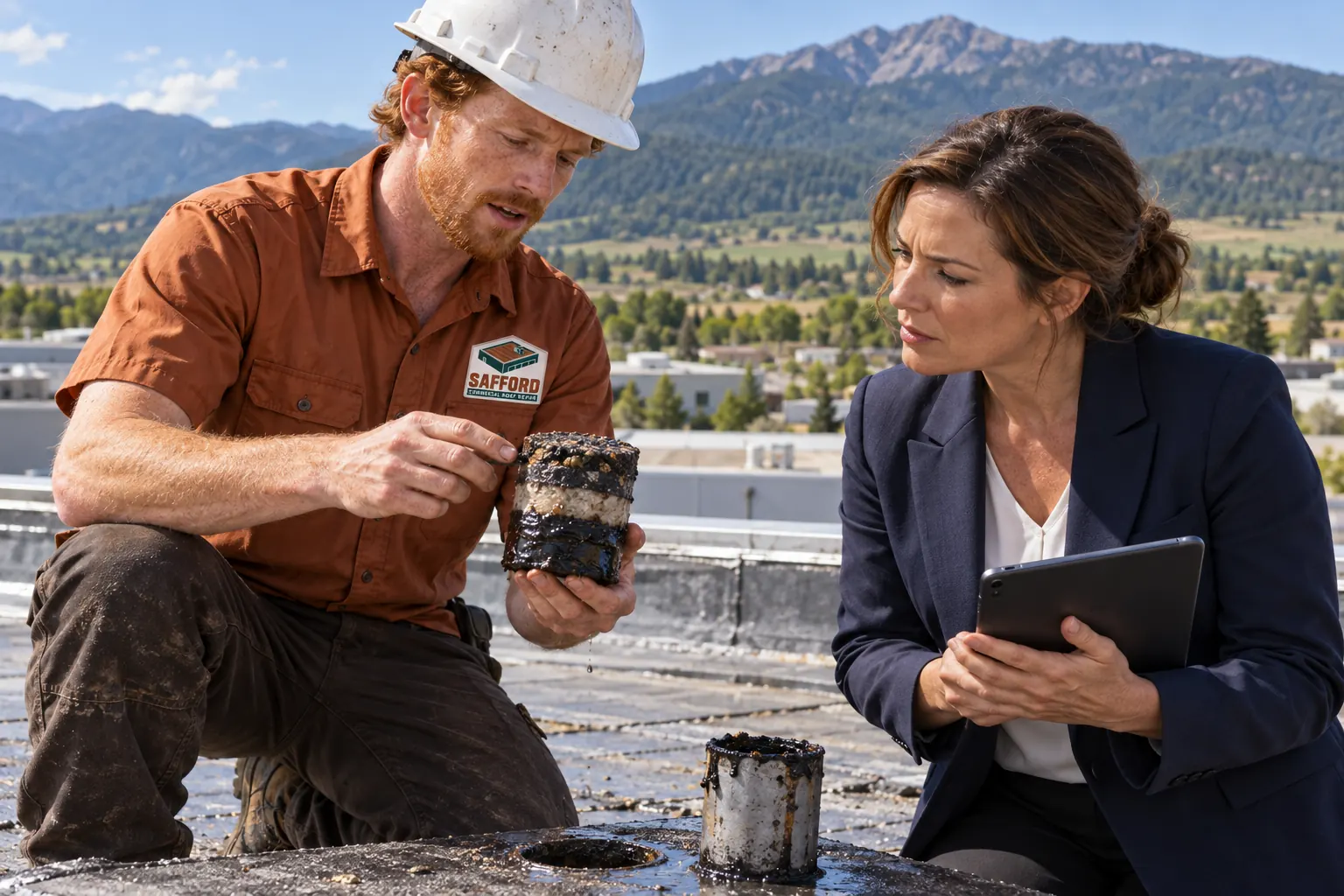
Suspect areas get a core cut or moisture reading, so wet boards are found and replaced before new membrane goes over them.
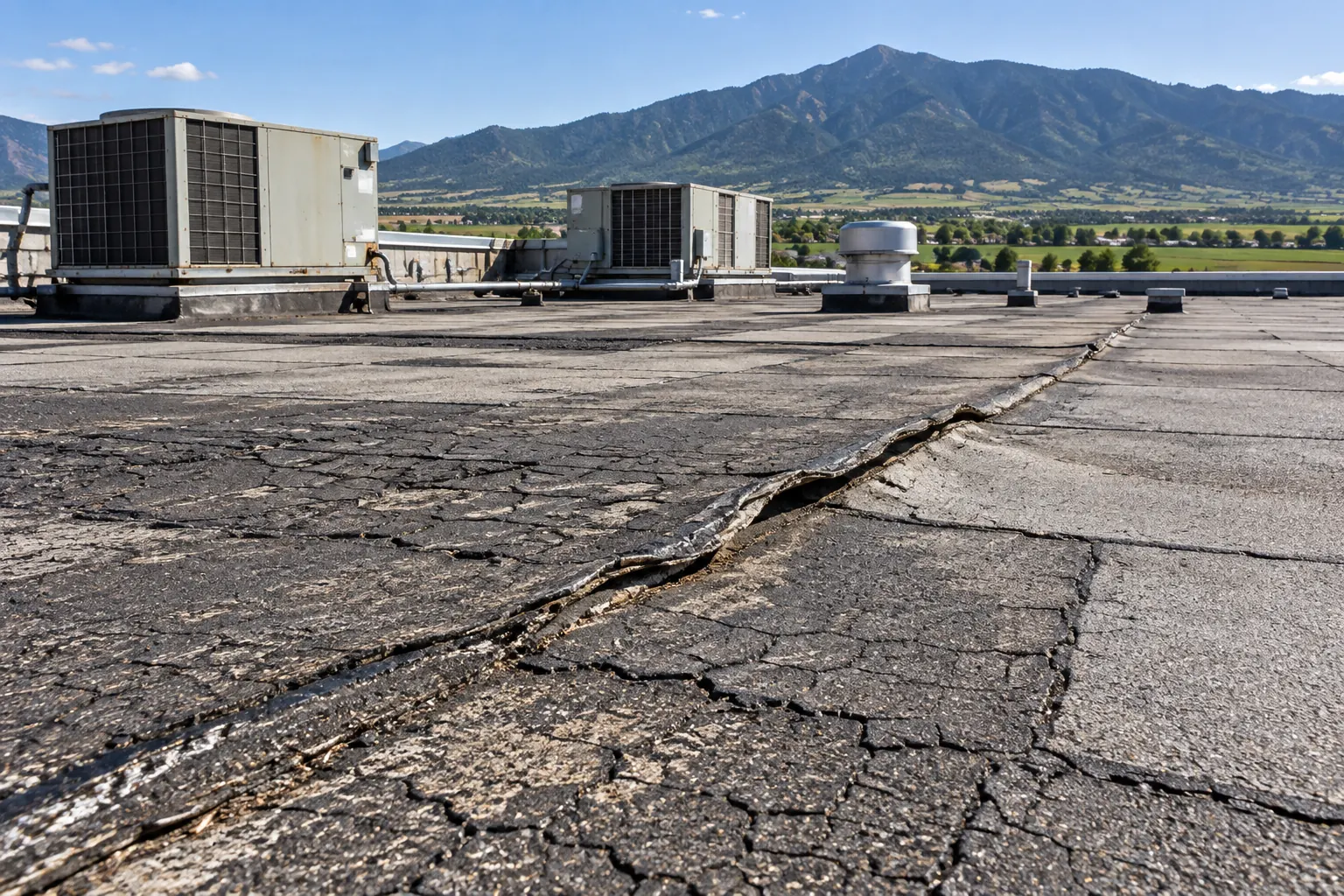
TPO and EPDM membrane has to be scrubbed and primed before a patch sticks. Dust and chalking from the Safford sun come off the roof first.
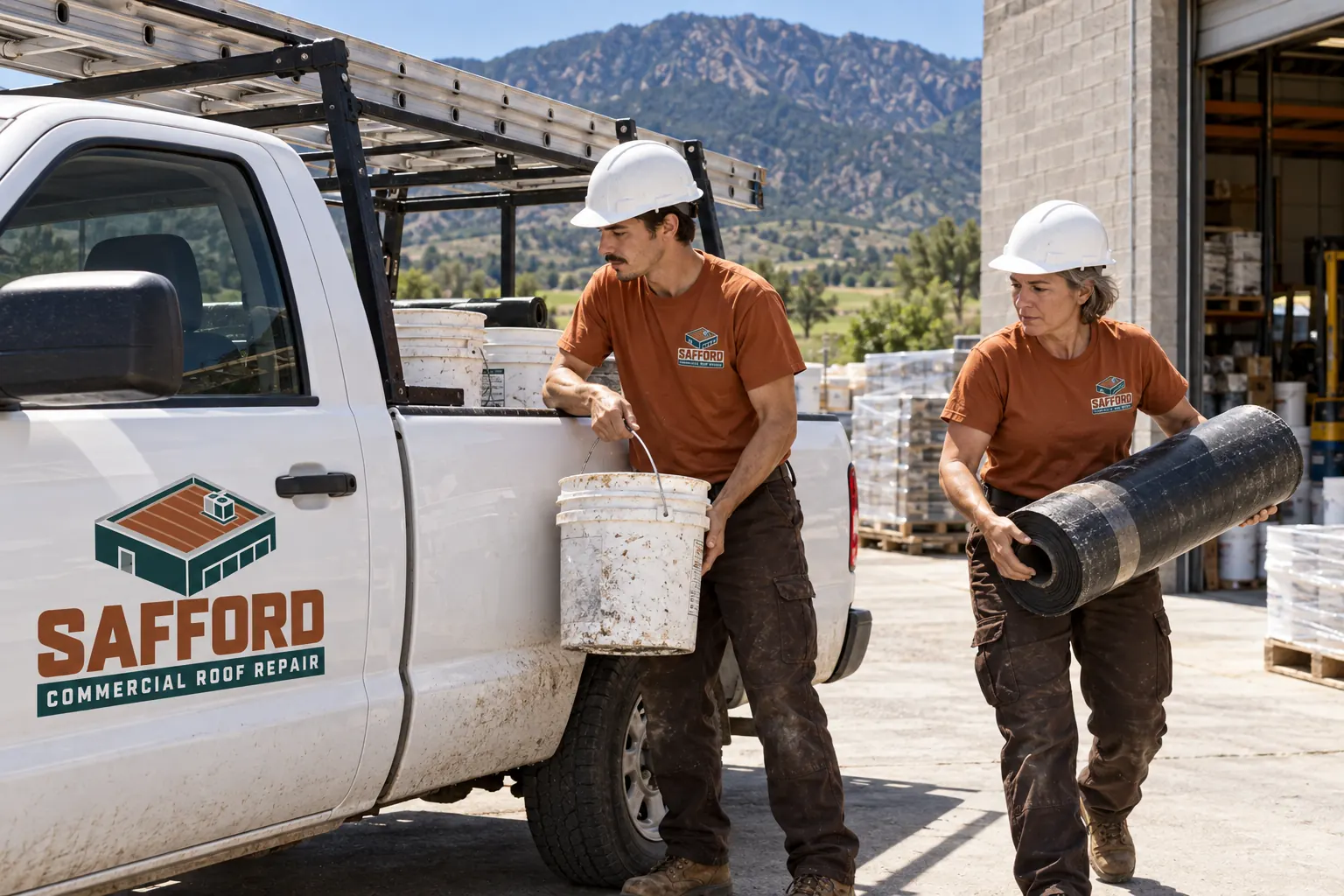
The repair goes on in the same membrane type: hot-air welds for TPO, primed tape for EPDM, bitumen and fabric for built-up roofs.
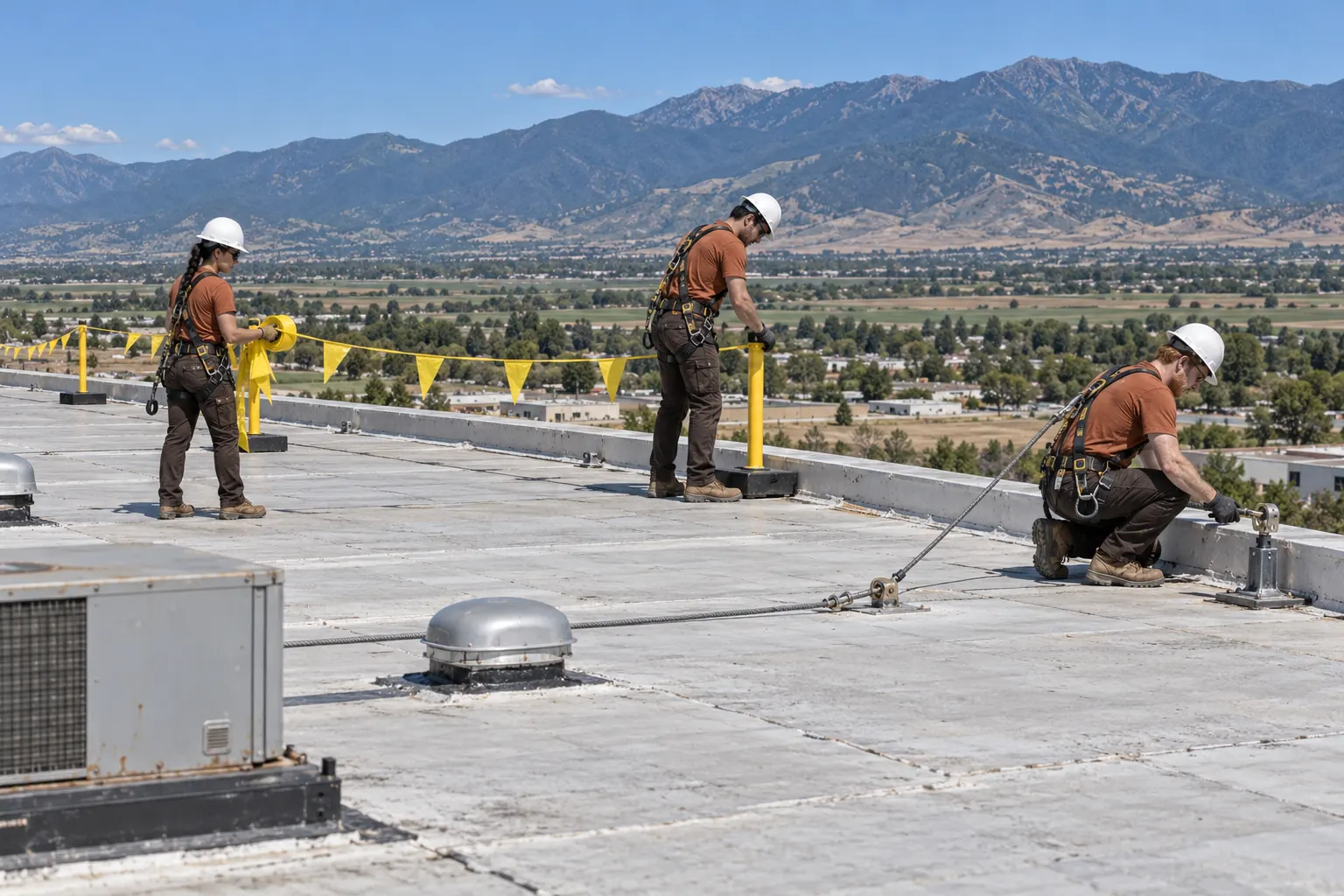
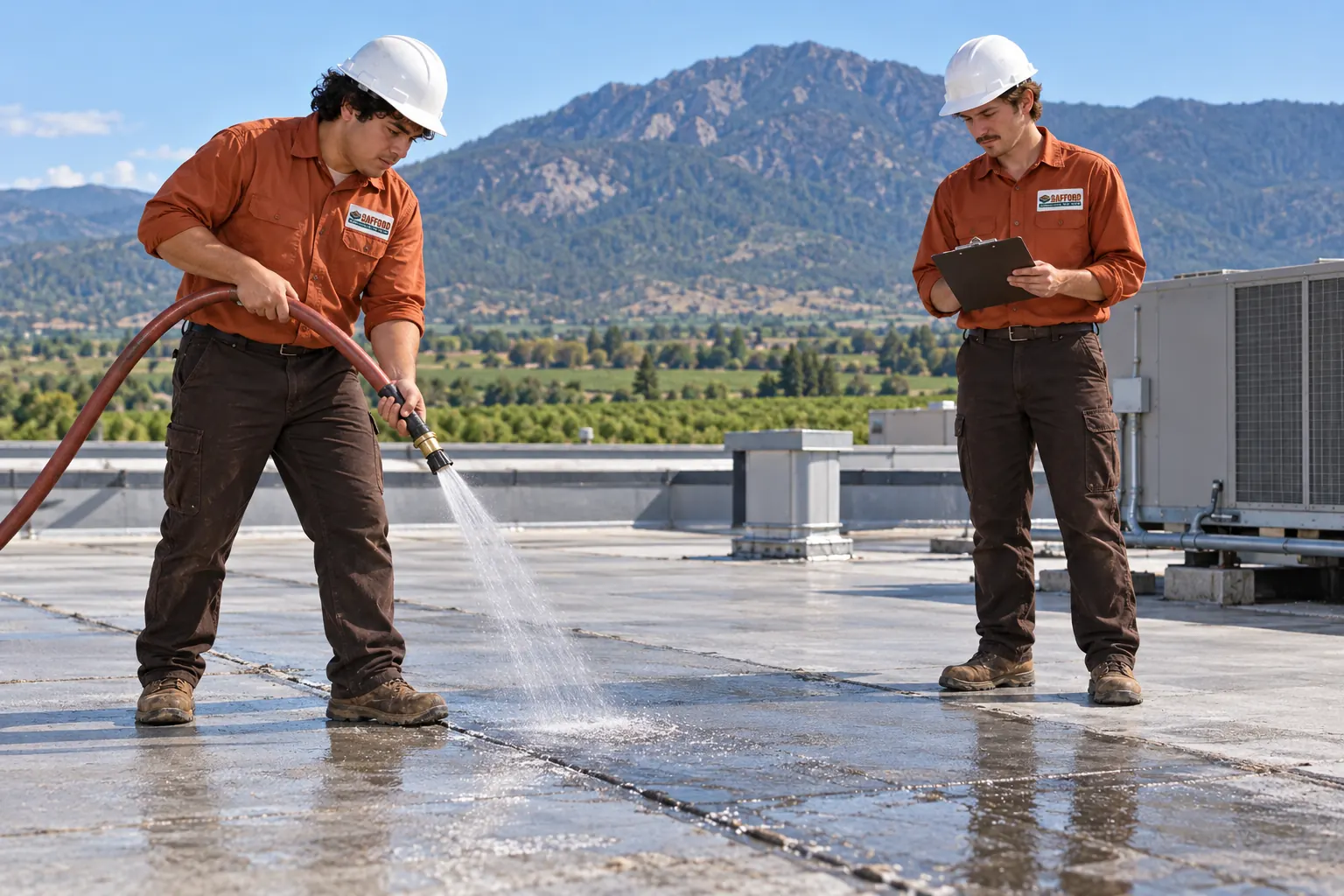
Where the drain layout allows, water is run over the repaired area and the ceiling below is checked before sign-off.
Flat roof problems often overlap with these two services.
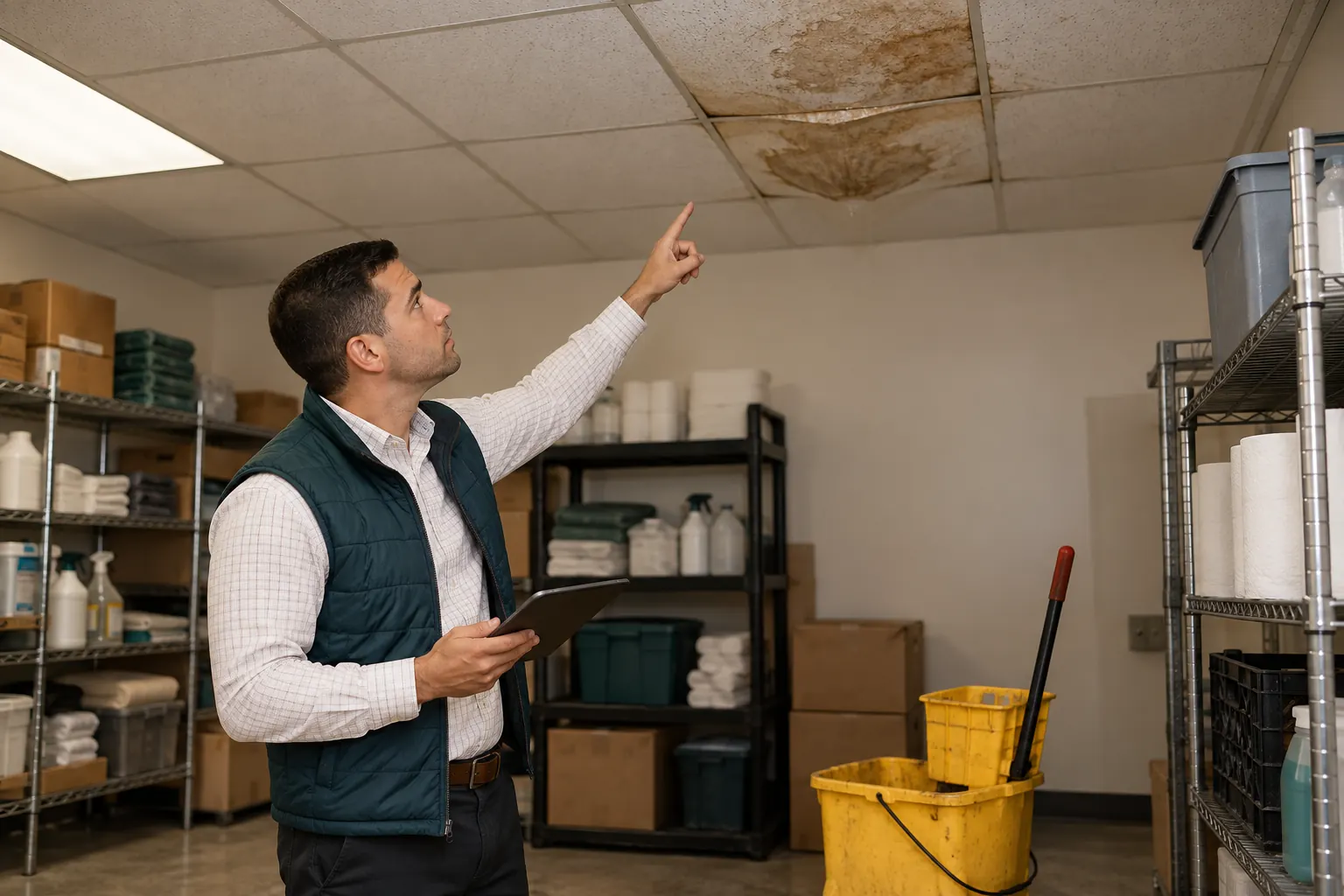
When the stain inside is far from any open seam you can see, leak tracing finds the water path before the flat roof repair goes on.
Commercial roof leak repair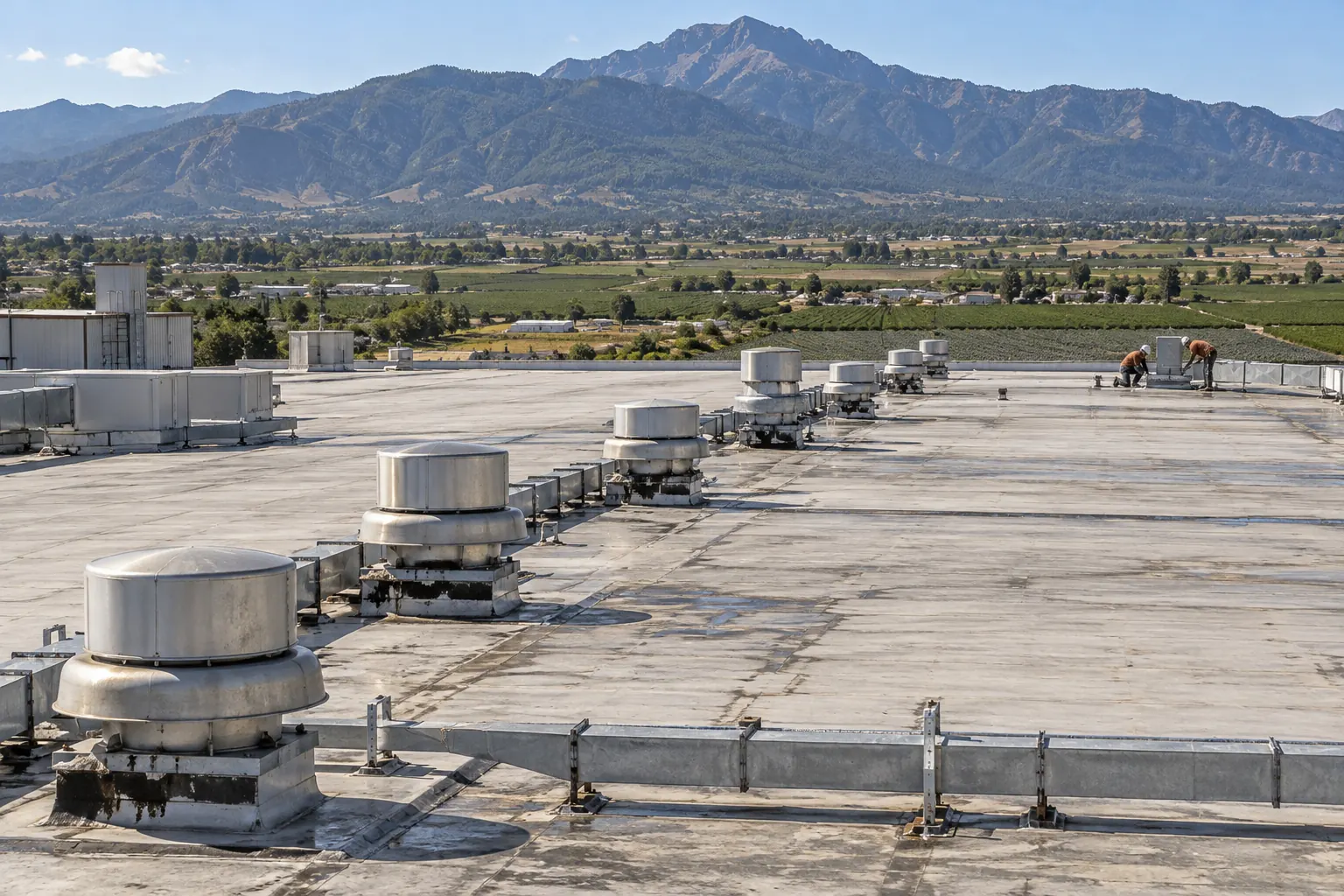
Plant and gin roofs with fans and stacks are often flat membrane too. That service adds staging and scheduling around running equipment.
Industrial roof repairMembrane, drains, and the details that leak.
At the edges and openings, where the membrane meets something else: seams opened by daily heat cycling, drains and scuppers packed with valley dust, curbs under rooftop units and evaporative coolers, cracked parapet coping, and dried-out pipe boots and pitch pans.
The open field of a flat roof is rarely where the leak begins.
Often, yes. Older TPO can still be welded once its surface is scrubbed and prepped. We test a small weld first. If the membrane cracks or refuses a weld, patching stops making sense.
Yes, when it sits over a seam or a patch. Clearing the drain or scupper, resetting a low drain, or adding a cricket at a wall moves the water. Widespread ponding needs a drainage plan, which we lay out after the inspection.
Yes. On built-up gravel roofs the gravel is swept back, the blister or split is cut and patched in bitumen, and the gravel goes back over the patch so the sun stays off the asphalt.
Coolers add water and weight to the roof. Overflow lines draining onto the membrane, rust at the cooler stand, and curb flashing cracked by vibration all gather around them. We fix the curb and reroute the drain line.
With safe access, a quick look at drains after storms helps. Stay on walkway pads near units, avoid soft spots and skylights, and leave seam probing to the roofer. Photos you take help us plan the visit.
Request a free estimate with the property address. We inspect the membrane, find the failed detail, and repair it to match.