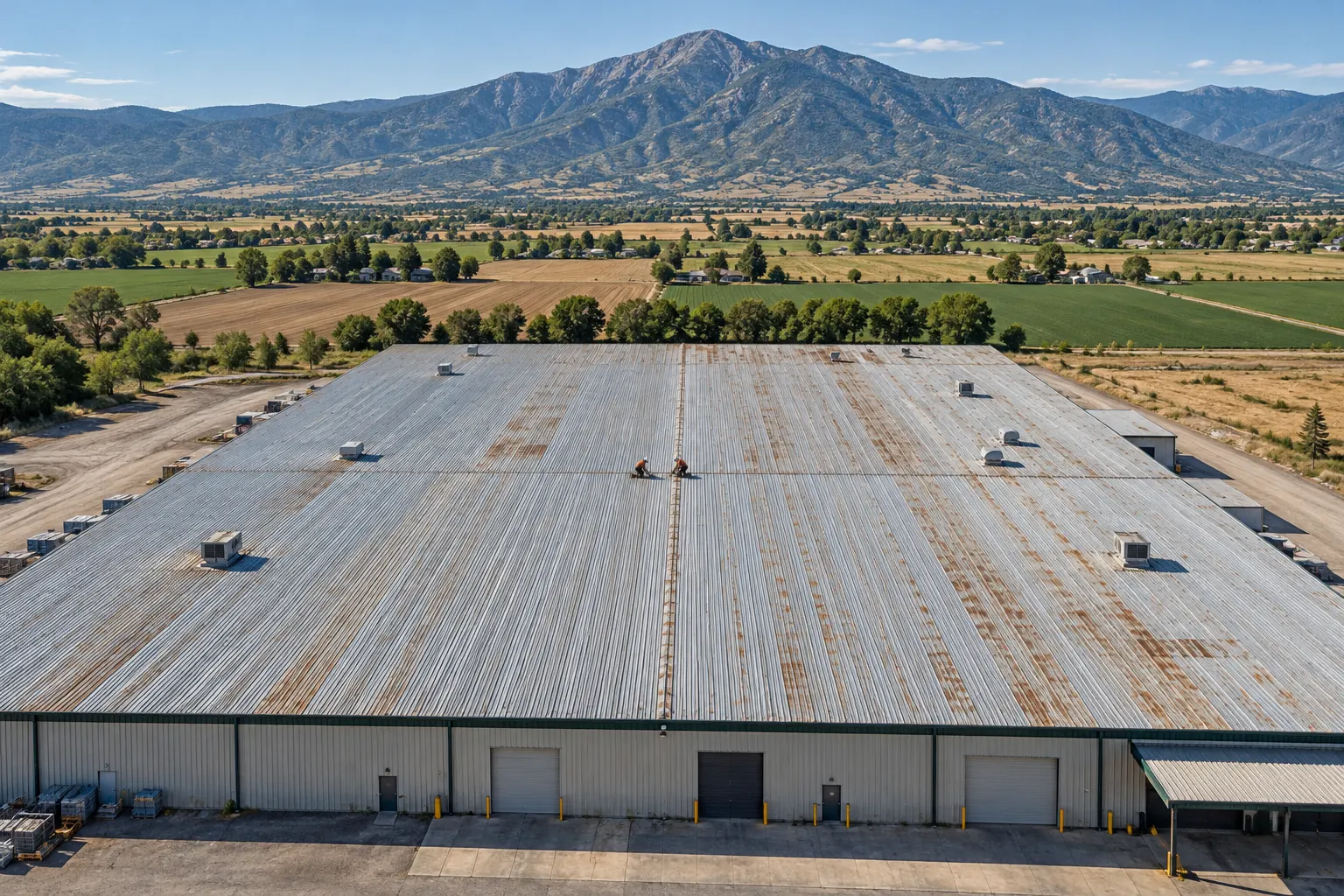
Commercial Metal Roof Repair
Steel shops along US 191 get fasteners, laps, and trim repaired, with access set from a ladder or lift.
Metal roof repair for Swift Trail Junction shops
Swift Trail Junction commercial roof repair for shops and commercial buildings on US 191 south of Safford. Roof access, tie-off, and staging get planned before the repair.
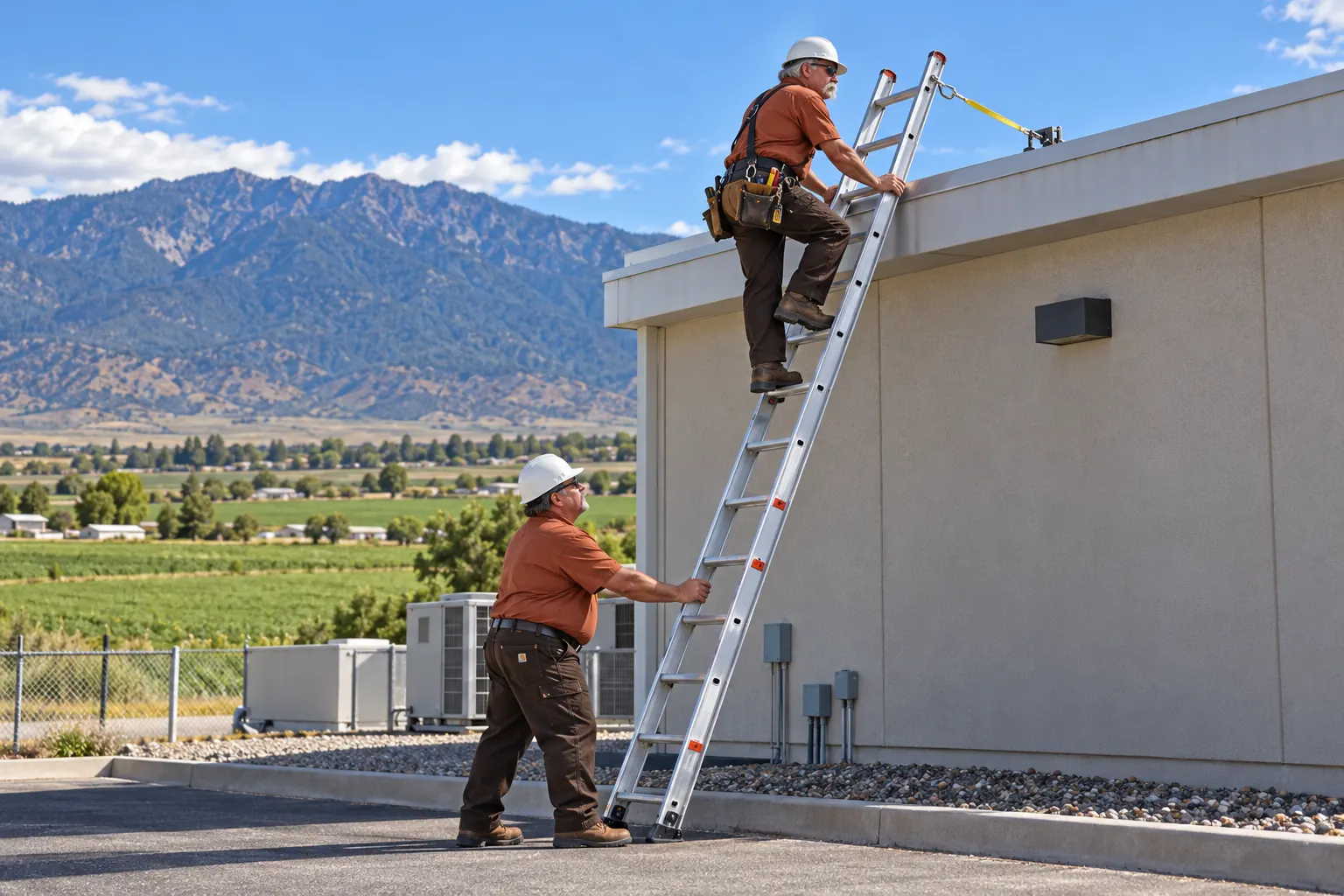
Many shops near the junction have no interior roof hatch, so access is the first part of the job.
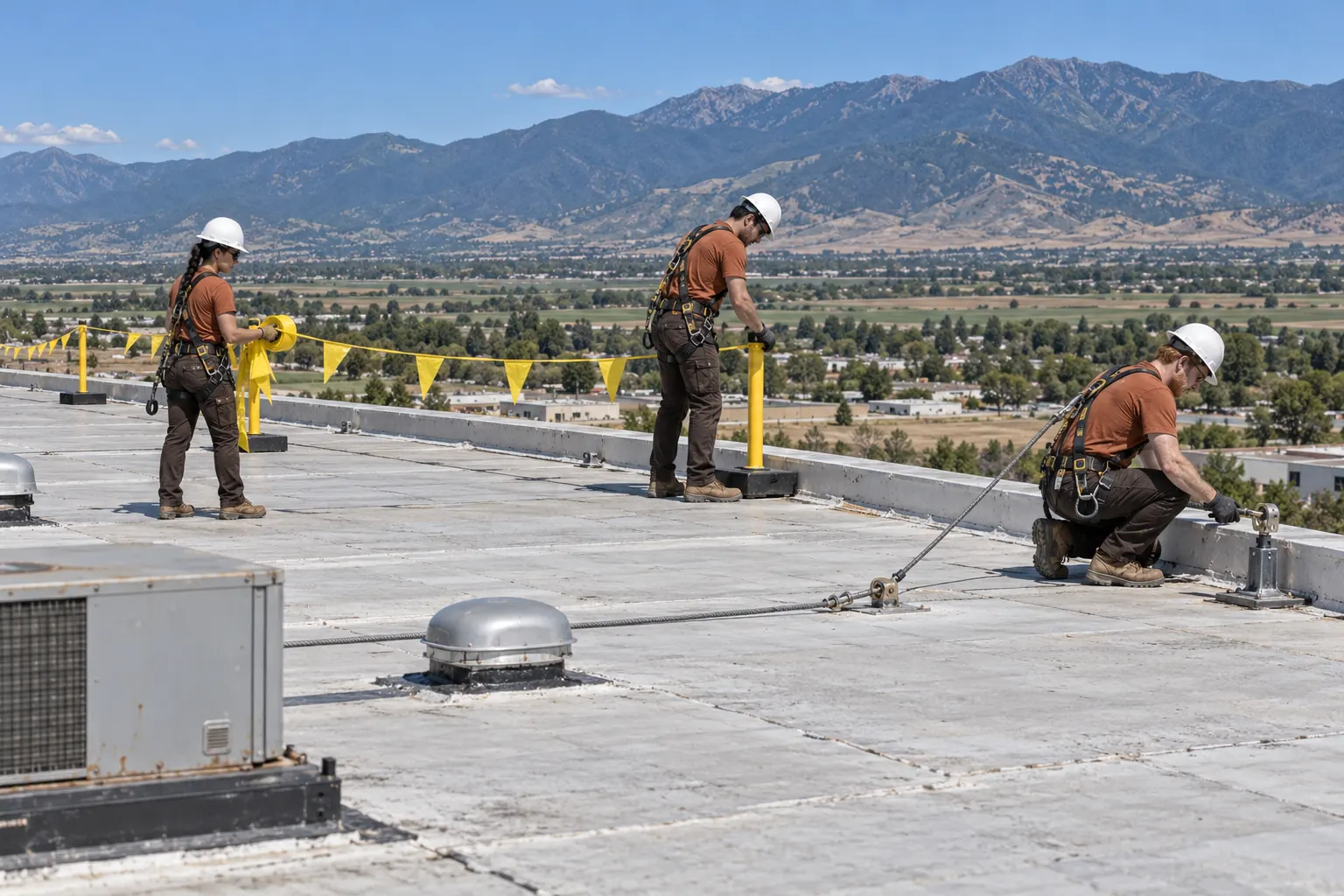
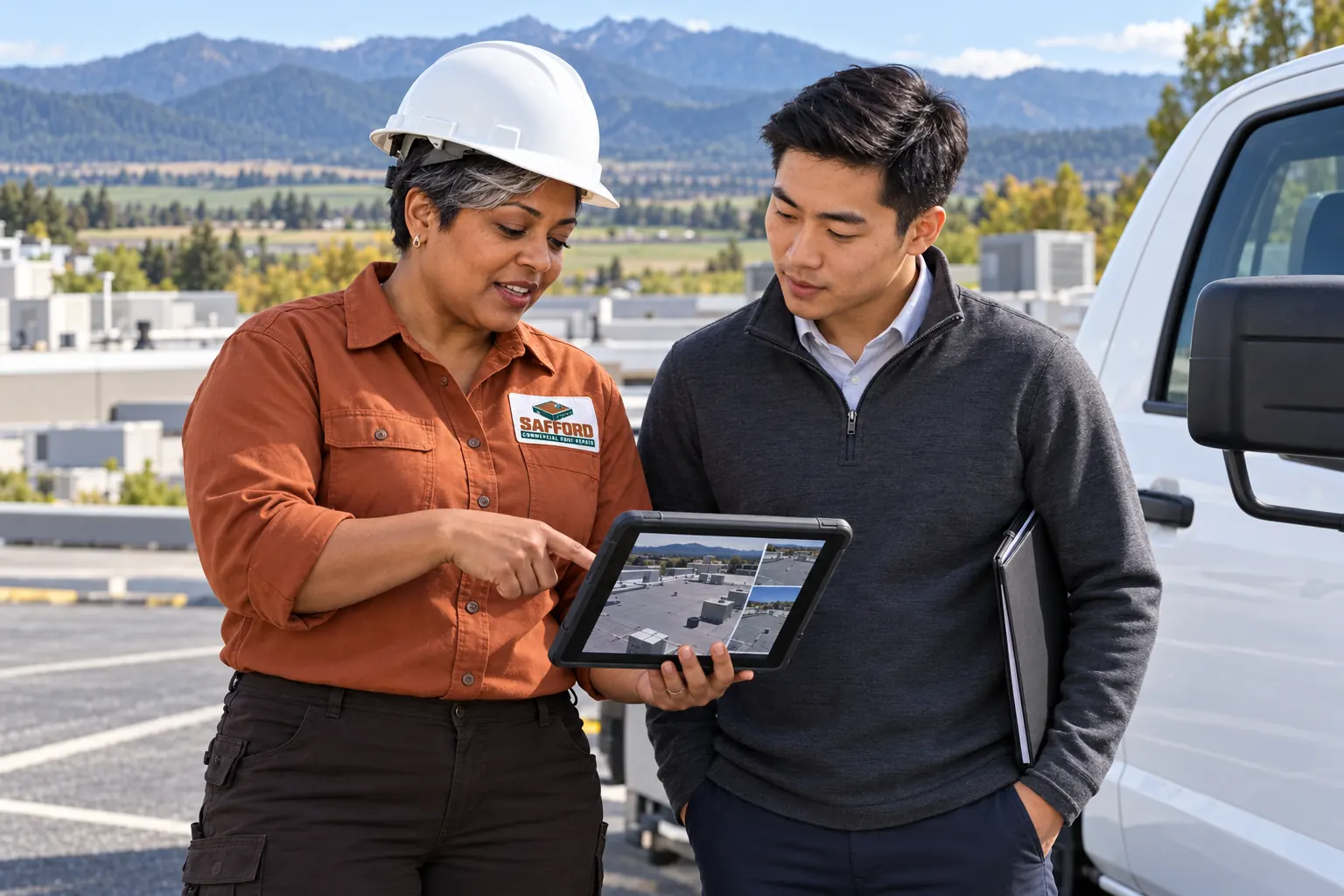
Shops along US 191 near where SR 366 heads up toward Mount Graham are often single-story steel or block buildings reached by ladder or lift. Before a roofer climbs, we decide where the ladder stands, where it ties off, and whether a lift fits the lot.
Material comes up the same way, so staging space beside the building gets planned too, away from customer parking and the highway.
Shops here see the same kinds of leaks as anywhere in the valley. These four are worth knowing.
Water appears at walls or skylights after a storm that brought hard gusts down the valley.
Edge metal, trim, or a skylight panel has lifted or cracked. We refasten or replace it and check the rest of the roof edge for the same damage.
Drips land near the shop door or office below a rooftop cooler or package unit.
Curb flashing or the cooler drain line has failed. We reflash the curb and reroute the drain line so it empties off the roof edge or into a drain.
Small bright spots show along the purlins of a steel shop on sunny mornings.
Fastener washers have cracked or holes have widened. Oversized fasteners with new washers go in, and laps near them get resealed.
Leaks start near the wall where earlier contractors set ladders or crossed the roof edge.
Gutters, edge trim, or panels were bent by earlier access. We repair the bent pieces and set one protected access point for future visits.
Planned access keeps the repair small and the lot usable. A replacement brings bigger equipment and longer staging.
| Planned Repair | Full Replacement | |
|---|---|---|
| Access | A ladder or one lift at a set point | Larger lifts or a crane for material |
| Staging | A small area beside the building | Room for tear-off waste and new material |
| Lot use | Most parking stays open | Parts of the lot closed during work |
| Work time | Short visits at the problem areas | Days on the whole roof |
| Best when | Damage sits at edges, curbs, and fasteners | The roof has failed broadly |
Two services cover most roofs here: steel shop roofs and leaks whose source is hard to spot.
Steel shops along US 191 get fasteners, laps, and trim repaired, with access set from a ladder or lift.
Metal roof repair for Swift Trail Junction shops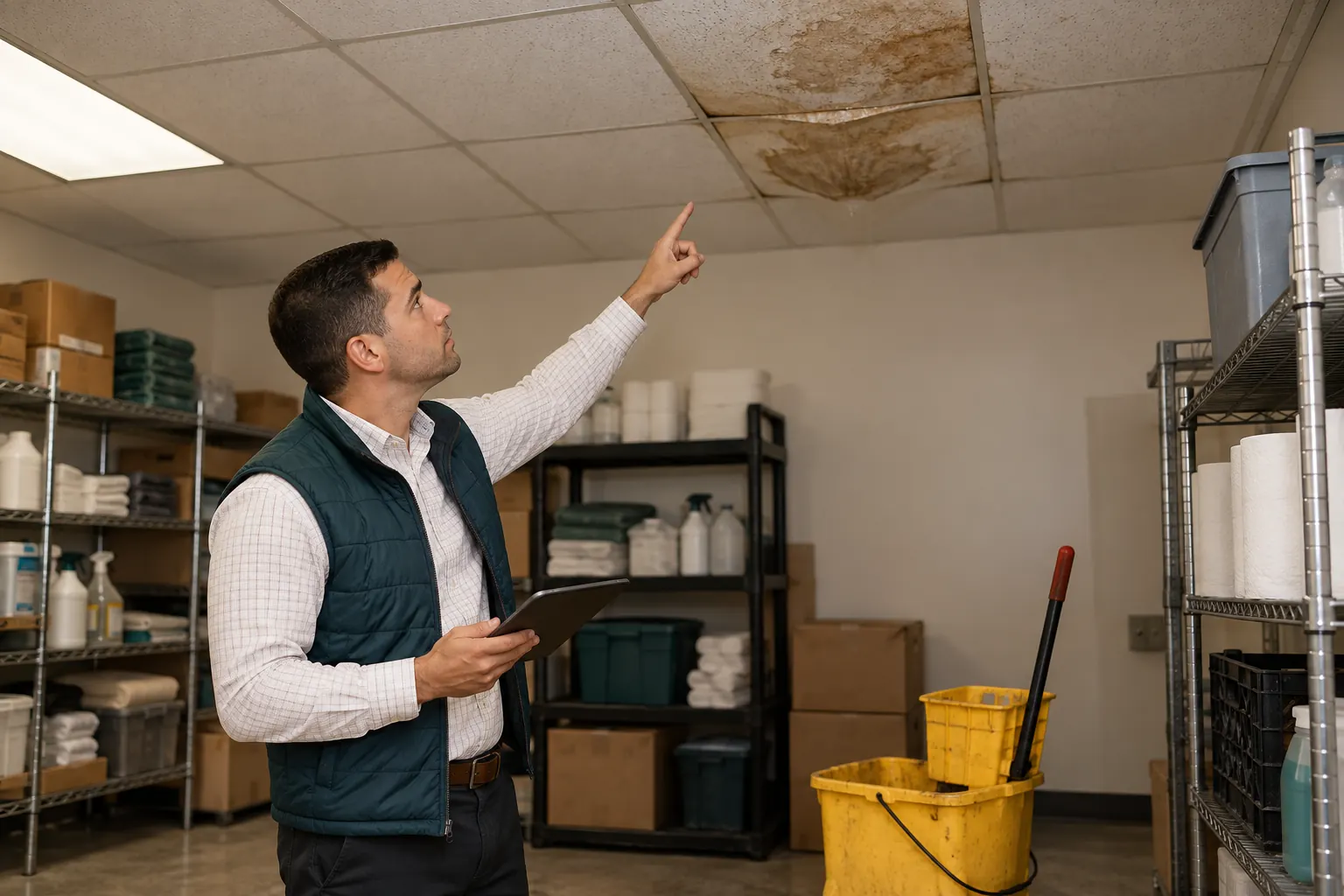
When a stain shows up inside and the opening is unclear, tracing and water testing find it before materials go up the ladder.
Leak repair for Swift Trail Junction buildingsTake photos from the ground, note the storm date, and call. We plan the access and check the edges, trim, and skylights.
Access comes first here, then the same repair steps as anywhere else.
After looking at the walls and lot for ladder and lift spots, the roofer walks the roof and checks edges, fasteners, curbs, and skylights.
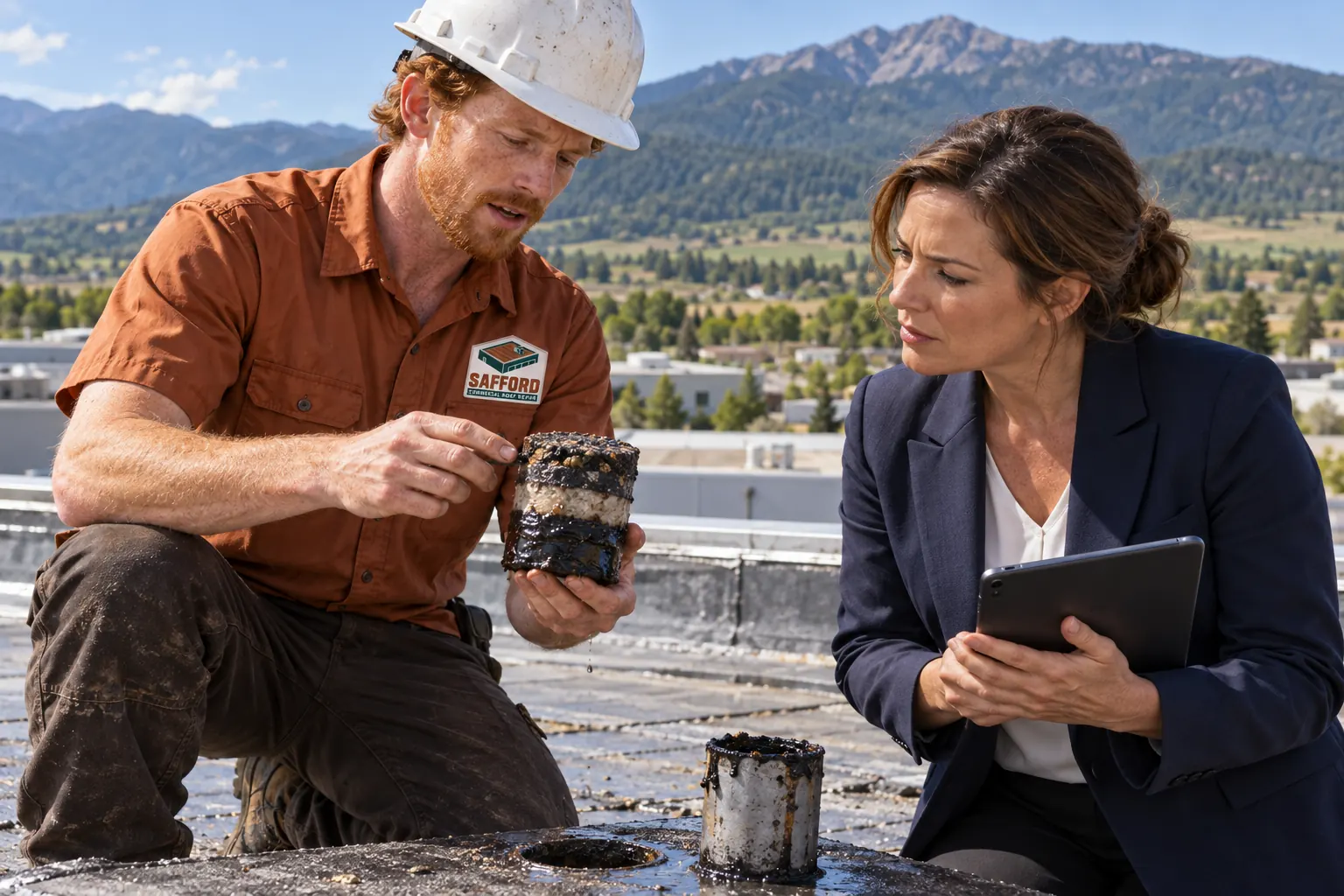
Ladders are tied off at one set point, anchors or warning lines go up on roofs without parapets, and skylights get screens.
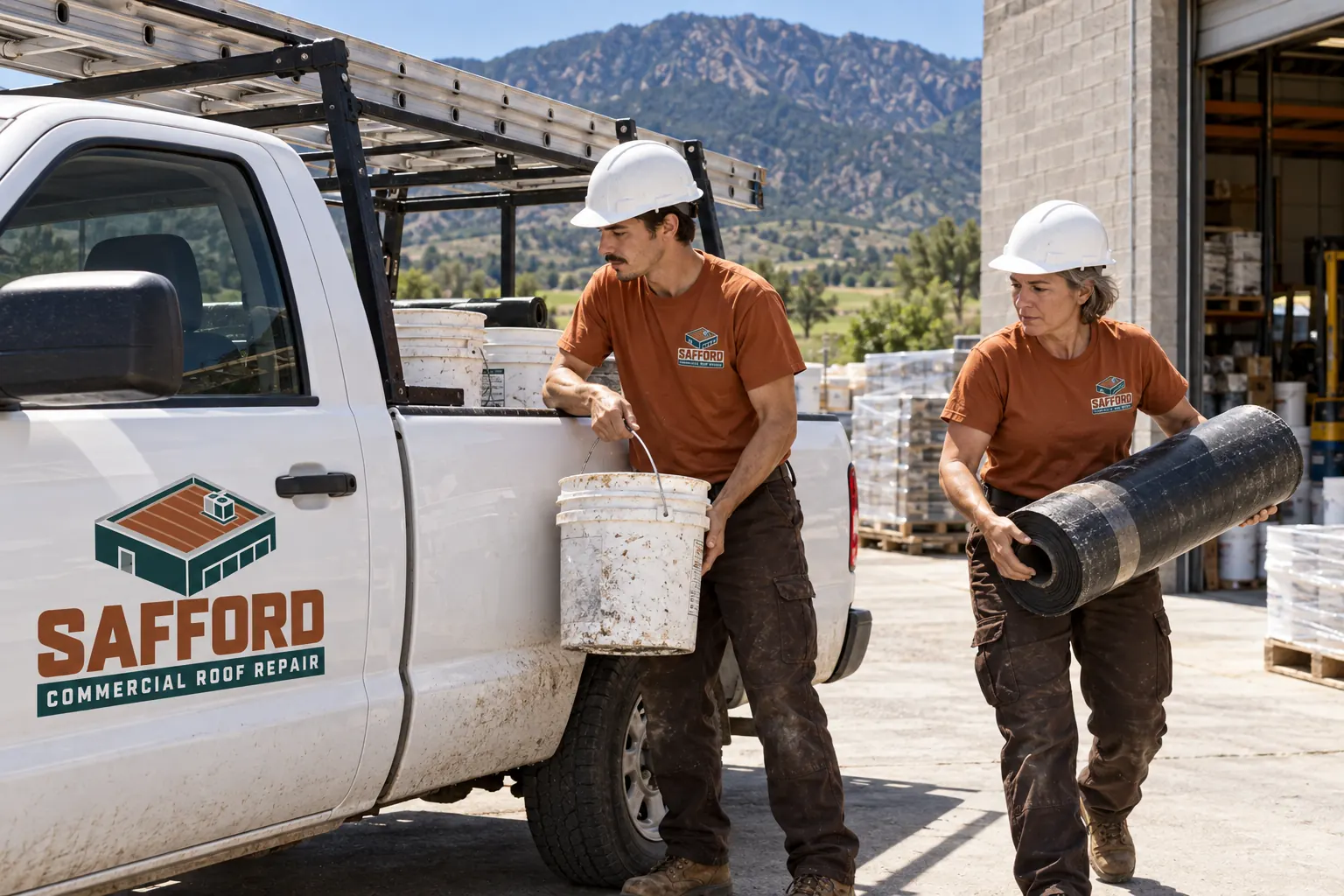
Panels, membrane, and fasteners come up in small loads and stay in a marked area away from customer parking.
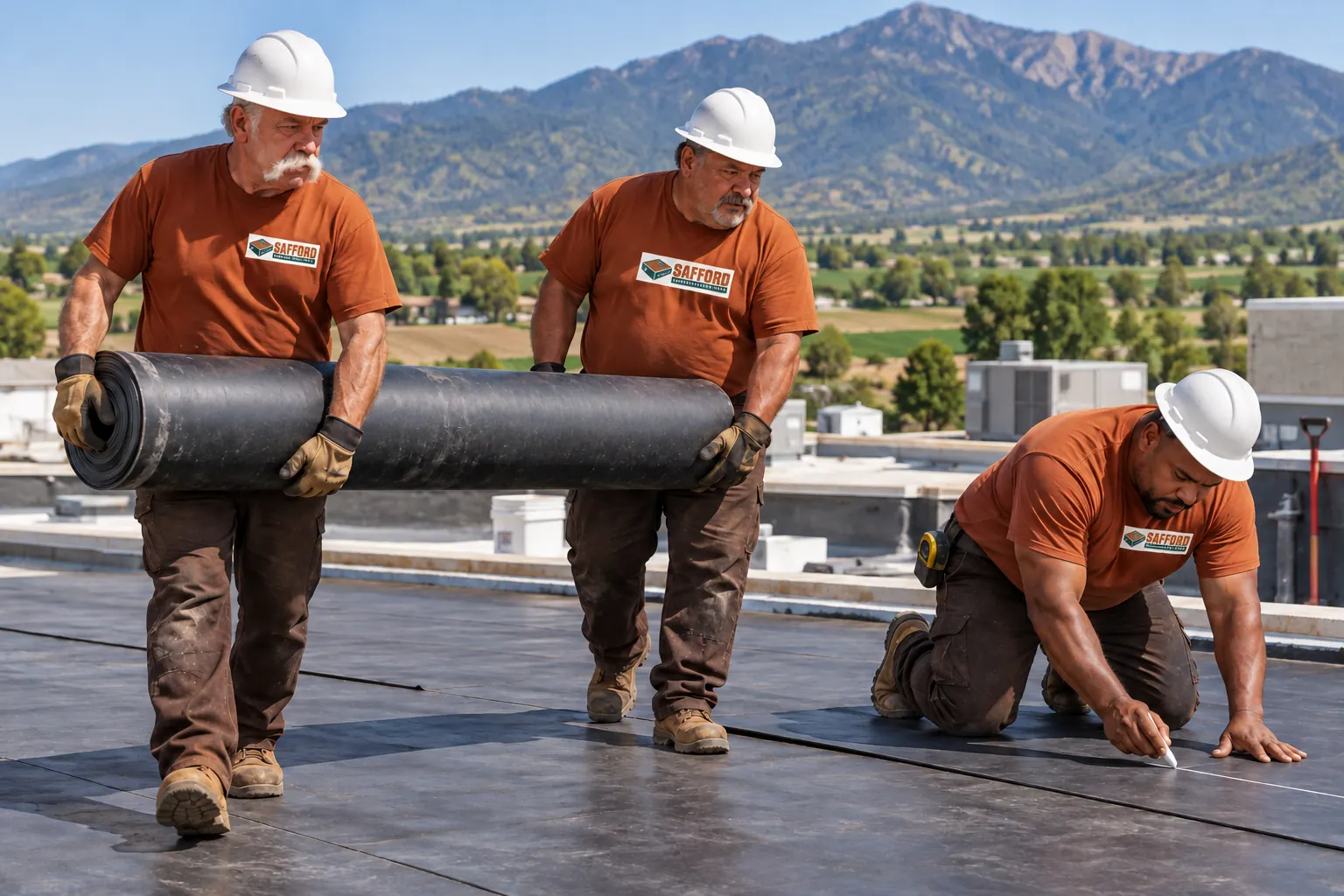
Fasteners, laps, trim, flashing, or membrane get repaired where the inspection found the problem, in matching material.
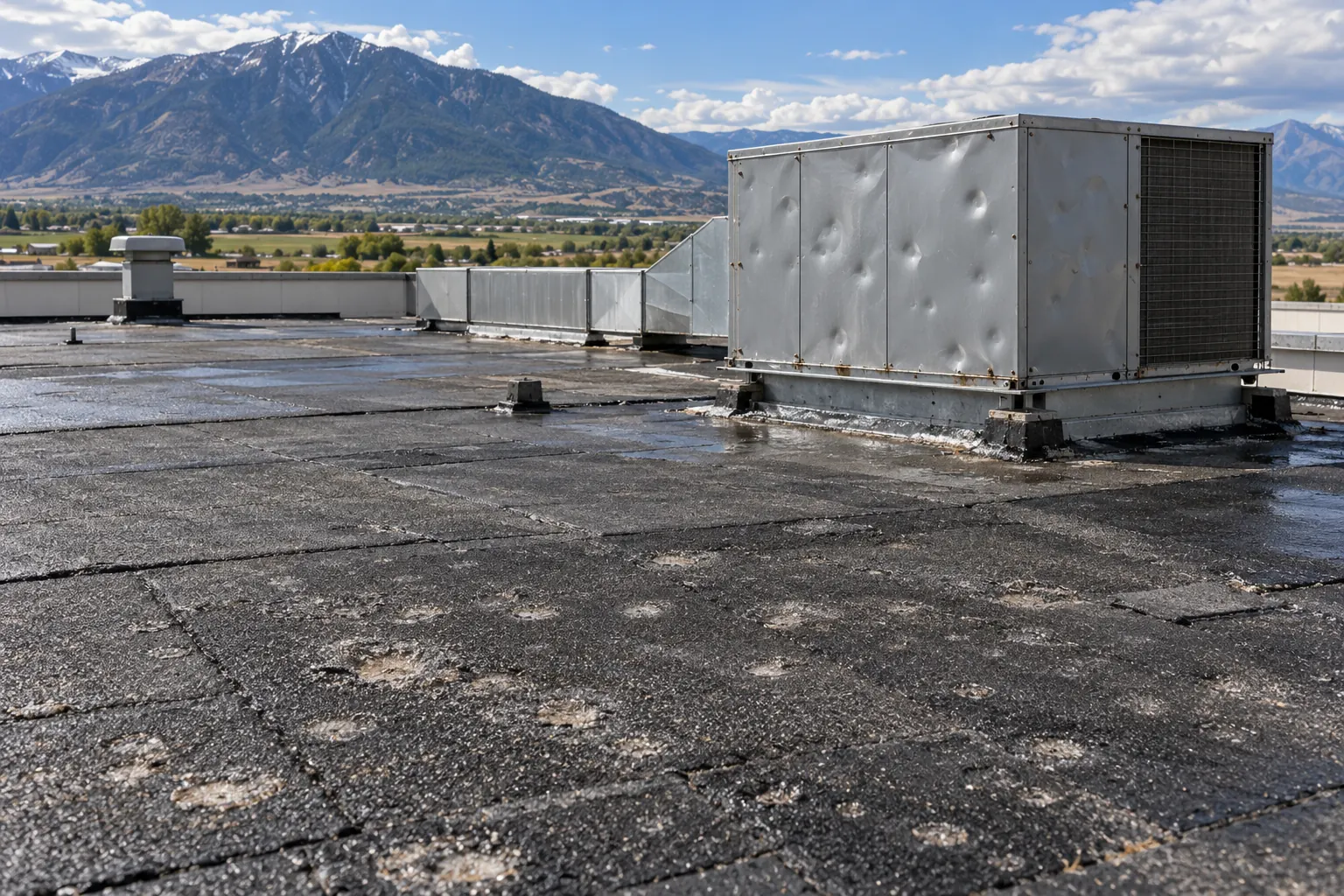
The access point is checked for damage, any bent gutter or trim is fixed, and you get photos of each repair.
Swift Trail Junction sits south of Safford, where SR 366 leaves US 191.
North up US 191, where most storefront roofs drain through parapet scuppers.
West of Safford on US 70, with older buildings repaired to match their look.
Farther west on US 70, where a metal shop often adjoins a flat addition.
East of Safford on US 70, with long metal ag roofs and heavy runoff at the eaves.
Access, storms, and county permits for shops near the junction.
Take pictures first and fix second. From the ground or a safe ladder, photograph lifted edge metal, torn membrane, dented panels, and debris, and inside, every new stain or wet floor. Write down the storm date and time and keep any tarping receipts.
Our inspection sorts new storm damage from older wear, a question insurers tend to raise. What gets covered comes down to your policy.
Graham County, since the area is unincorporated. The county takes building permit submissions through its online portal and asks applicants to upload building plans, a plot plan sketch, and power-of-attorney forms.
No. Most shops here are reached by ladder or lift. We set the access point, tie off, and protect the ladder area so the gutter and edge trim stay straight.
Often, yes. We check the ground surface, overhead power lines, and room to set up before planning a lift. A ladder covers most small repairs.
The access point and staging area are marked off, material stays away from entrances and parking, and nothing is lifted over people. Tell us your busy hours and we work around them.
They can. Gusts and hail crack brittle skylight panels and loosen their laps. Cracked panels get replaced and loose laps resealed, and every skylight near the work is screened while we are up there.
Yes. Block and stucco buildings with flat roofs get the same seam, drain, and parapet repairs as any membrane roof, with access planned the same way.
Request a free estimate for your Swift Trail Junction building. We plan the access and repair what the storm or the years left behind.